Leaderboard

Popular Content
Showing content with the highest reputation on 11/15/2017 in all areas
-
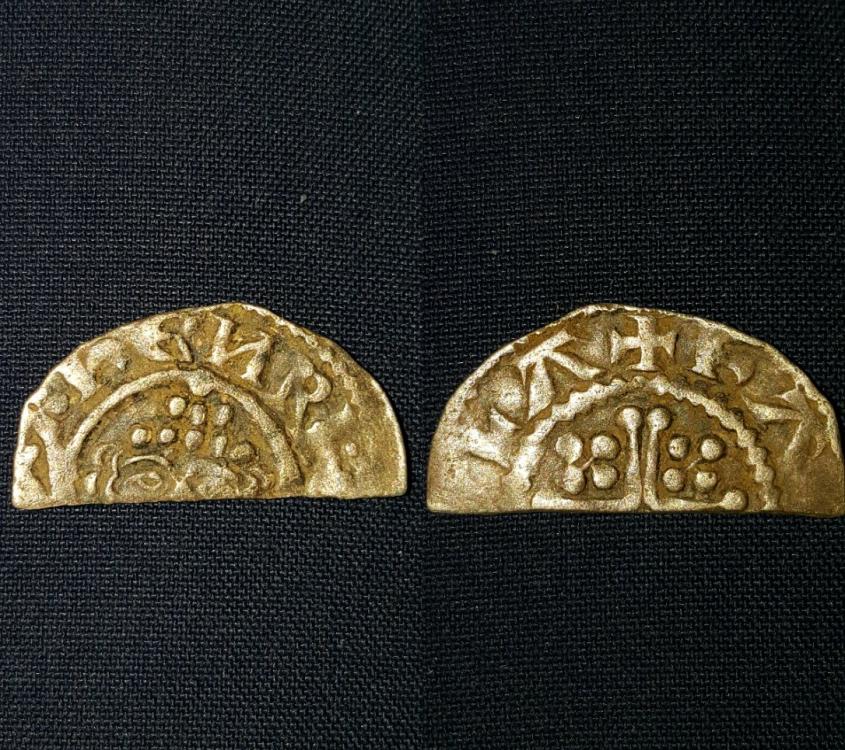
Half penny of Rhuddlan. Group 1 Class 1 of Henry II or Richard. Moneyer Halli.
 2 points
 -
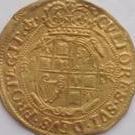
I think this has to be the most beautiful gold coin I have plucked from the ground. This was found some 25 years ago, every time I look at it I think about the poor person that dropped it. It still has luster around the legends.
.jpg.cc9b44c503fad3c1a404a4daeea7f4b0.jpg)
.jpg.3c35ad1aa93428ad506a85089ed863d8.jpg) 2 points
2 points -
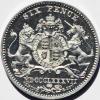
Historically, or at least say 10-20 years or more ago, VIP was only attached to those years in which proofs were made in limited numbers (a handful of examples), i.e. the years in which sets were not made for the masses. The years in which it applied started from 1926 onwards when a few proofs were struck of all current denominations and continued up to the early 1960s. Notwithstanding the debate about the first year which some contend are not (though I'm happy that my 1926 halfpenny is one), there are coins extant with proof quality finish for all years in between, though not necessarily all denominations for every year due to gaps in the dates of currency issues. It should be noted that not all proof coins of these rare issues exhibit frosted devices. During the past 10 years, the phrase 'VIP' has been misappropriated in my opinion to include superior strikes with a cameo effect with a resultant explosion in the number of 'known' examples. There has been an occasional example of a set in contemporary boxes that were different to those issued for the masses, which if it could be proved were genuinely issued to 'VIP' recipients by the mint, could therefore be justifiably be classified as such. As VIP means very important person, it should include the likes of the Chancellor or the Queen, not Mrs Smith of 16 Acacia Avenue, Bognor Regis. The whole thing is a case of semantics in my opinion, and arguably a triumph of marketing over reality.2 points
-
Gaz no, silver does not strike well when heated - it goes very brittle and you get a lot of striking cracks. To strike correctly the silver needs to be heated to red heat for no more than 15 seconds and then quenched in a cooling/blanching solution to disrupt the crystalline structure that develops when heated These annealed blanks are then struck cold2 points
-
The Obverse die or pile ( the one that has more complex design - usually the portrait) is the one that has the locating spike. The reverse die or trussleis the one that takes the hammer blow and is the one that wears way quickly ( usually the die reduces in length by approx. 8 mm every 1000 coins). easy to remember Trussles in the hand , piles on the bottom2 points
-
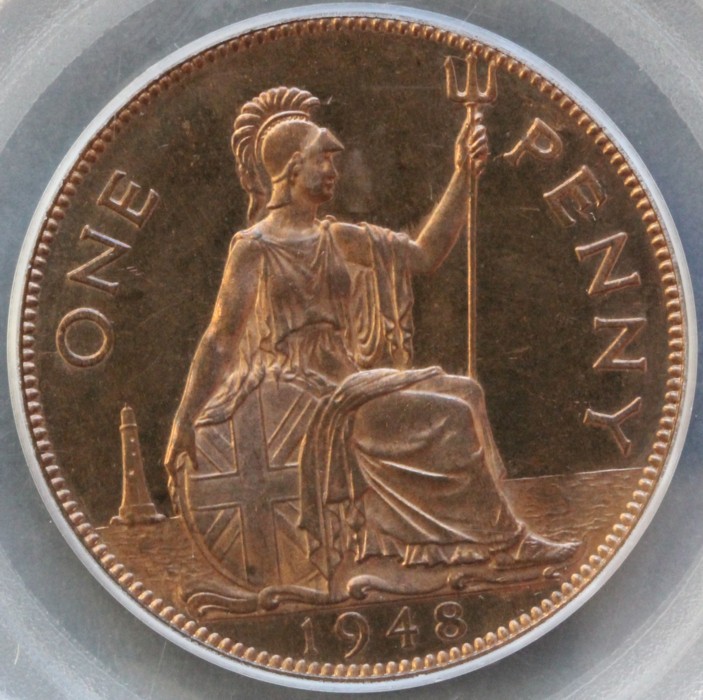
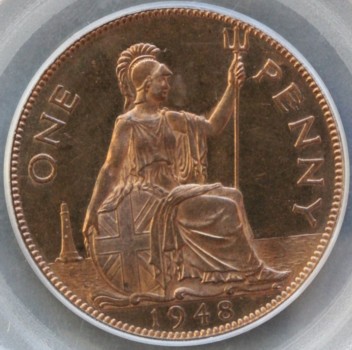
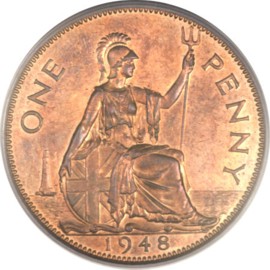
The term "cameo" gets bandied around quite a lot without, as far as I know, an unambiguous description. It is certainly dangerous to draw conclusions from photographs as to whether a coin is cameo or not. It appears to me that the method of photography and lighting etc can make huge differences to the appearance of a coin. For example, I own 2 1948 proof pennies and the photographs that I took with my digital SLR, macro lens and built-in flash make them look like cameos and yet when I hold them in hand they are clearly not. Terry Eagleton sent me a 1953 proof penny which looks like a cameo in hand but my photographs of it do not ! I'm assuming that a true cameo appears to have a darkish background with a lighter "frosted" raised image ? My photo on left This the original Heritage photo which is more as it appears in hand. The basic message, as always, is to be wary of photographs and judge it in your hand wherever possible !
 1 point
 -
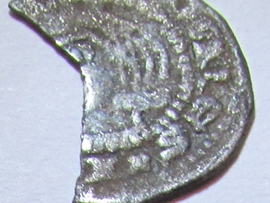
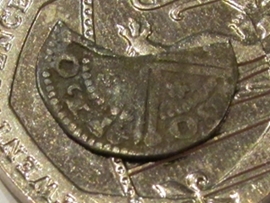
Turns out this little coin is a denier of Floris V, Count of Holland (1256-96) struck early in the reign, Voided long cross on the reverse, very rare. The type has been traced but as yet no specimens fit the legend, so work still in progress. Thanks to Peter Spencer the editor and compiler of ID & V Desk in the searcher.
 1 point
 -
That is my big criticism of LCGS. The lack of independence.1 point
-
Stunning!! I'd of been gutted if I'd of dropped that back in the day.1 point
-
lovely find.1 point
-
Really nice, that one Zoo!1 point
-
That is a keeper....Zoo1 point
-
The argument for calling them VIP proofs was that sets were thought to be made in limited quantities for people in high positions. It was also thought that having received one, the same people would be unlikely to advertise their prior ownership indicating their having made a bob or two from a gift, hence the lack of provenances indicating receipt directly from the mint. It all made for a feasible story. Having said that, I have also heard an unverifiable story that a visit by a party to the mint on one occasion finished with each of the participants striking a coin to take away as a momento. This was allegedly a proof, but as I said, unverifiable. It was however, one of the pieces that appears to crop up more often than others. Only the RM can provide a definitive answer - not the collecting or dealing fraternity.1 point
-
Have you got Mrs Smith's Phone number Rob I want to buy her set1 point
-
They are still going for over £100 and the BU £175 on some bloody mind boggling.1 point
-
Yes i did notice, with a bit of BBC news, that the £1 capital cities set shot up to nearly £40 overnight. Calmed down again after a couple of days. I keep trying to stay away from Kews but cannot help myself if its going cheap enough. I remember grudging £20 for them a couple of years ago. I,ve 3 Kews just now bought betwee £70 & £75. When ebay have their £1 selling fee on i will list them at £90 each & postage. ???1 point
-
Here's my other one again really nice strikes and that stunning luster looks like almost frost and if you were to touch it your finger would stick
 1 point
 -
I'd be surprised if it wasn't 10 years at least, that's if my memory serves me correctly? I'm thinking of the Liz 3ds in particular, but I stand to be corrected. Time's a funny thing, it's what makes history so fascinating!1 point
-
It's amazing to think that something as massive as a new moneyer could still exist out there!1 point
-
J.P Mass almost solved this one. He knew of a cut half with USTIN on it of Henry II class 1b1. He couldn't attribute it to any mint nor did he guess the missing letter , could of been Justin as well as Austin i suppose. Its listed as an unknown coin of Henry II in his book on page 86.1 point
-
Thanks chaps. Evidently this is quite a contentious issue. As you say @VickySilver paying £5000+ for a coin of uncertain pedigree (VIP or not?), seems somewhat impetuous.1 point
-
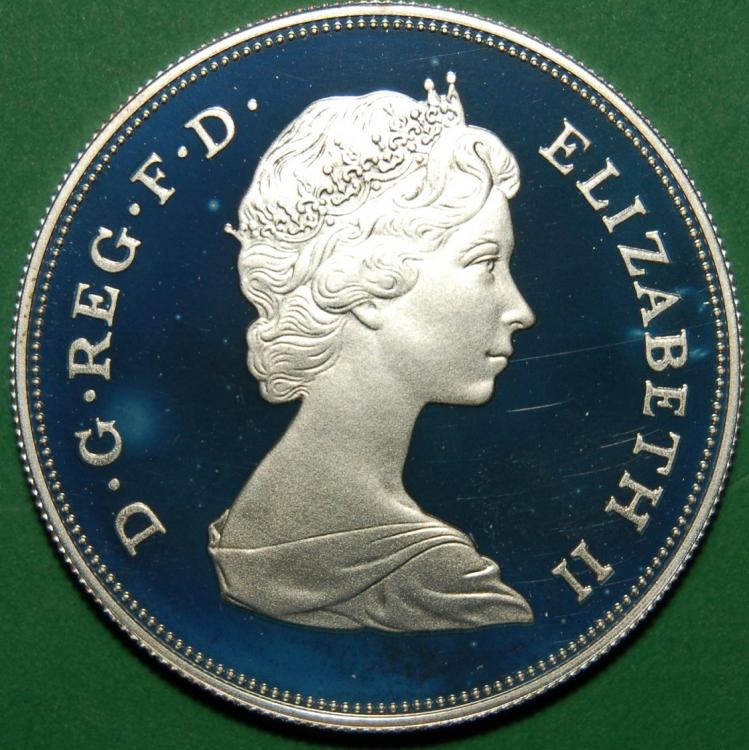
This is going to rumble on and on ad infinitum. FWIW, my take is a pre-requisite of good frosting, but absolutely mirror-like fields to complement it - as below. The field is the most crucial component in my opinion.
 1 point
 -
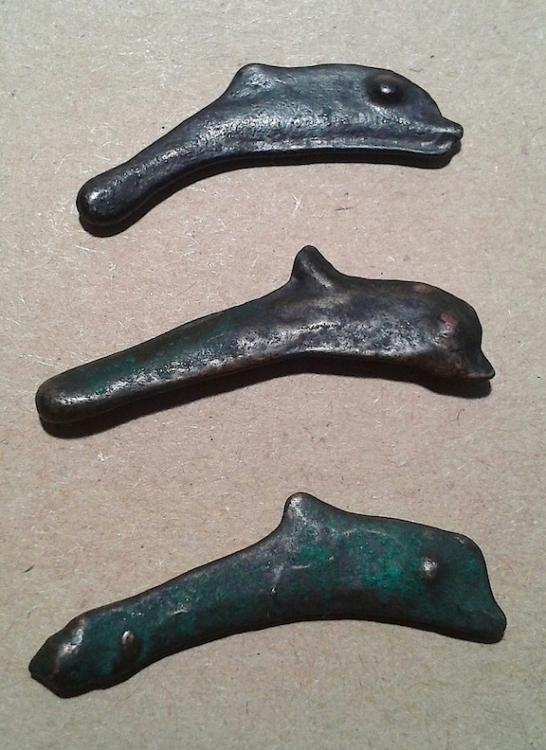
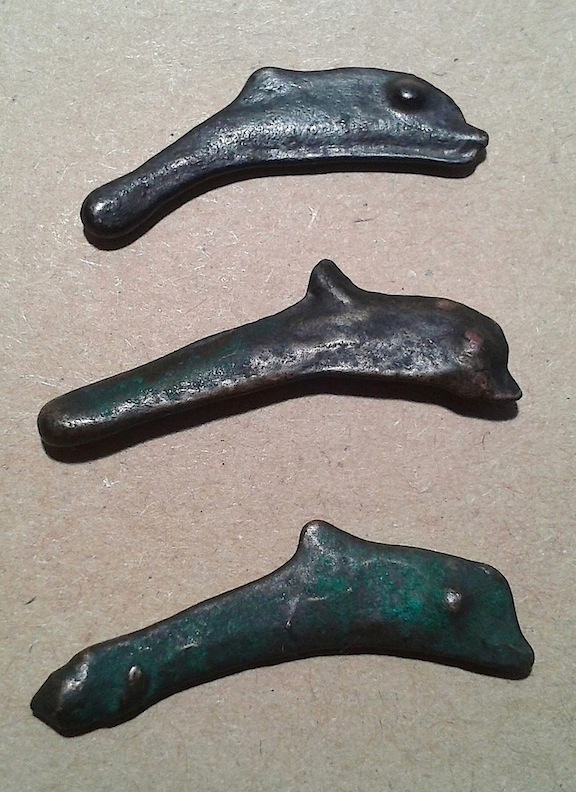
Beyond BC? There are a number of objects around our house which fit the bill, but if we're talking coins I have a few Greek, Alexander the Great, Philip of Macedon etc. and also these: Dolphin money from the Black Sea area, 5th to 3rd century BC. They were cast on poles, attached in rows at the tail end (think sprouts in their natural state), then tapped off when cooled.
 1 point
 -
Superb quality reverse, though of course we could nit-pick about the central strike, as I'm sure you already have, though it really is nit picking when so many other factors are spot on! Nice one, I say!1 point
-
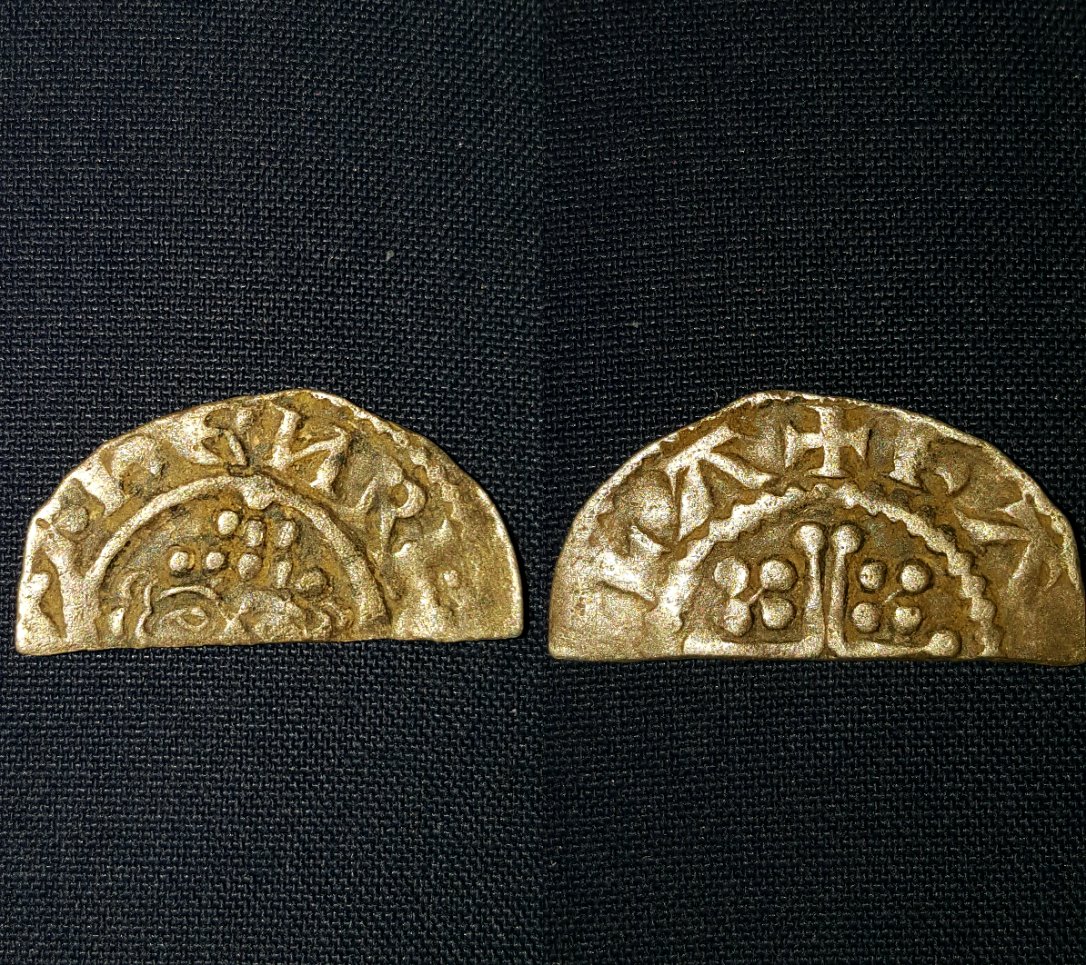
Probably didn't understand "naive"... Is this the seller of this unbelievable coin? https://www.ebay.co.uk/itm/Unusual-small-coin-what-is-it-/162720585108?fromMakeTrack=true1 point

.jpg.3d6874d8f8eca6ed0678c126de4fb9b2.thumb.jpg.061f9faed5d4a1c82b1d93813b8e785c.jpg)