david.bordeaux
-
Posts
102 -
Joined
-
Last visited
-
Days Won
15
Content Type
Profiles
Forums
Events
Downloads
Store
Gallery
Articles
Everything posted by david.bordeaux
-
There seems to be great confusion about the diameter of the UK silver florin between 1893 and 1970. Some sources, including the Royal Mint shop and the Numista website, indicate a change of diameter in 1937, giving 28.30 mm for 1893-1936 and 28.50 mm for 1937-1970. Other sources give a single (but different!) diameter for all florins between 1893 and 1970: Krause (28.3 mm), Wikipedia (28.5 mm), Peter Davies (28 mm) and Matthew Dickinson (28.5 mm). Analysis of the coins in my collection refutes the idea of a small increase in diameter in 1937. On the contrary, there is a statistically significant decrease in diameter. I find no evidence for the existence of a florin measuring 28.30 mm of any date. For 1893 to 1936, the diameters measured range from 28.44 to 28.74 mm. From 1937 to 1970, from 28.36 to 28.57 mm. Assuming that the Mint measured in inches, my conclusion is that the correct (nominal) diameters for florins are as listed below: Godless 1849: nominal diameter 1.10 in = 27.94 mm (rounded to 28 mm) Gothic 1852-1887: 1.18 in = 29.972 mm (30 mm) Jubilee 1887-1892: 1.16 in = 29.464 mm (29.5 mm) 1893-1936: 1.125 in = 28.575 mm (28.6 mm) 1937-1970: 1.12 in* = 28.448 mm (28.4 mm) *Another possibility is that the diameter was “metricated” in 1937 to 28.50 mm Unfortunately the Coinage Acts give only the weight and fineness of each denomination, and not the diameter. Any thoughts on this would be gratefully received.
-
 I have since discovered that George de Saulles died of peritonitis after surgery for appendicitis.
 -
In fact he was only 41. So far I have only found that he died after a "very short illness". In his obituary in the Numismatic Chronicle, his former employer John Pinches suggests that overwork contributed to his death: "It is to be feared that his devotion to his art, which kept him working early and late, weakened a constitution never very robust and helped on the end so much to be deplored."
-
I recently bought this 1895 penny, completely outside my usual area of interest, as I'm doing some research into George de Saulles. I know next to nothing about pennies, but assume from the price I paid that this is the more common variety of high/low tide on the reverse?

-
TICKET CENTRAL
david.bordeaux replied to Rob's topic in British Coin Related Discussions & Enquiries
Possibly Raymond Carlyon-Britton (died April 1960), son of P.W.P.? -
Newly listed, a 1951 crown (complete with a shabby ink-stained cardboard case) for just 250 pounds plus postage. Rush before someone snaps it up!
-
"onc" tenth florins
david.bordeaux replied to david.bordeaux's topic in British Coin Related Discussions & Enquiries
An examination of the collection at the British Museum revealed one very clear example of "onc": the 1857. This is catalogued as "possibly a proof ? according to D. Fealy" and it undoubtedly has proof-like fields and is in FDC condition. I regard this as further evidence in favour of an error in die preparation (and against the theory of simple die-fill - proofs are not made from worn dies...). As always, any thoughts welcome - and does anyone know anything about "D. Fealy"? Postscript: it is perhaps natural that the opportunity to handle and examine such splendid coins in museum collections initially evokes feelings of envy in the collector. But it soon gives way to the more rational analysis that such specimens are really best off in a public collection that is accessible to all - and not, thank goodness, encapsulated in plastic.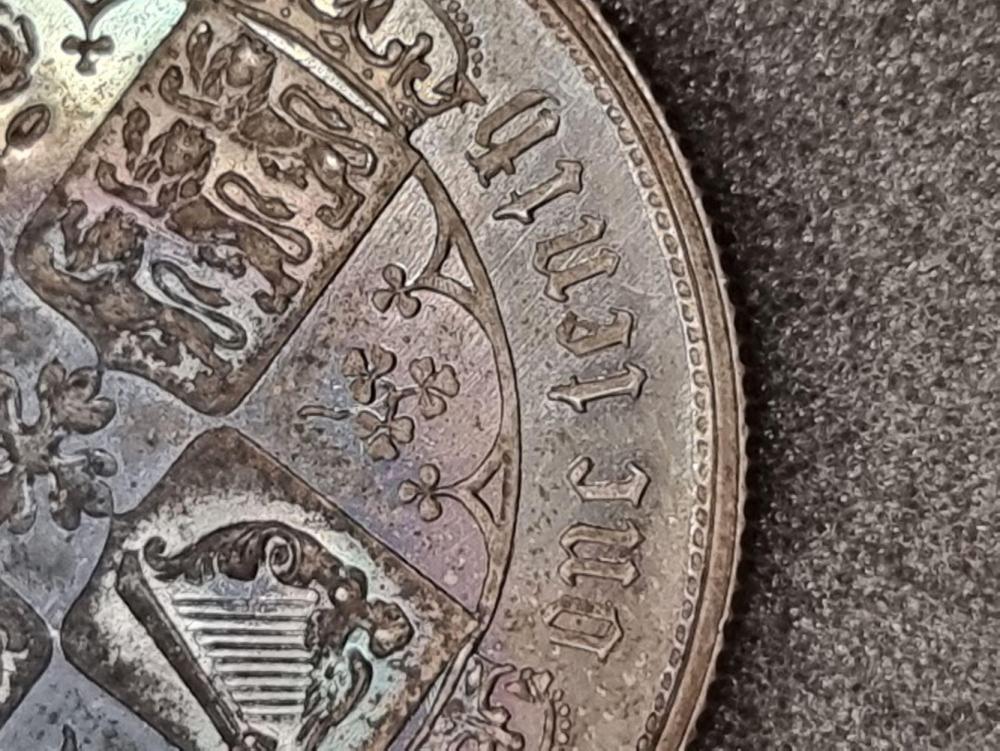
-
"onc" tenth florins
david.bordeaux replied to david.bordeaux's topic in British Coin Related Discussions & Enquiries
Interesting that there was a trace of the missing bar, as it is completely missing in the examples I found on auction sites. This contrasts with the so-called xxr error in the 1881, where there is almost always a trace of the missing serif. In both cases, I think a broken punch is more likely than die fill, given that only specific letters are affected. Also interesting that florins were being catalogued as "onc" as early as 2005-7. Does anyone know when onc florins were first spotted? All I know is that they are in the 7th edition of ESC (2020) but not in the 4th edition (1974). -
I wanted to pick your collective brains on the “onc tenth” florins of 1853-1860, and possible theories on how the error came about. 1. Is it a “c” or an “e” with the oblique bar missing? A comparison of the “e” and “c” on the obverse seems to show a slight difference in the width of the letters. 2. If it’s an “e” with the bar missing, is this due to die fill? The oblique bar is very fine, so this could be a possible explanation. But if so, why does it only affect the “e” in “one” and not that in “tenth” (or the “e” in “One florin”, for that matter)? 3. Whether it’s a “c” or an “e” with a missing bar, could it be that a wrong or faulty puncheon was chosen when sinking the die? But again, why only the “e” in “one”? 4. Is it possible that there were puncheons for the entire word “one”, one of them was faulty, and that this was occasionally used over the course of 7 years when sinking new reverse dies? Each pair of dies produced only around 25,000 coins at the time, so the 1853 florin alone (mintage nearly 4 million) would have required upwards of 150 dies. 5. If 4 is the correct explanation, it could also explain the sudden disappearance of the error in 1860 – the faulty puncheon was detected and destroyed, or it wore out and was discarded. 6. A quick survey of auction archives would suggest that the error is more common than might be inferred from Bull. ESC 7th edition Heritage London Coin Auctions Noonans Spink 1853 “scarce” 2 3 1 1 1854 “4 seen” 1 9 1 1 1855 “5 seen” 1 1856 “7 seen” 1 1857 “6 seen” 1 1858 “4 seen” 1859 Not recorded 1860 “5 seen” 2 2 Number of examples of “onc tenth” florins offered at four auction houses between 2010 and 2023. With the exception of London Coins, most were not catalogued as “onc”. Any thoughts or insight on this would be much appreciated.
cdetail.jpg.b743ac818cd8b65d1b39b0a8c8d8d009.jpg)
edetail.jpg.9b6867f70615c4422b4d67691d00078c.jpg)

-
more FAKES
david.bordeaux replied to numismatist's topic in British Coin Related Discussions & Enquiries
And another in Noonan's sale on 10 May, Lot 103. But I'm not entirely convinced that these 1864 florins (all with obverse die no. 64) are fakes. Apart from the strange "n" in tenth, they look absolutely spot on (unless I'm missing something). Could they simply be genuine coins with an error on the reverse die that was paired with obverse die no. 64? -
Any thoughts about this 1862 Gothic florin, which went for £360 + BP at today's Noonan's sale? My suspicions were raised by the "leg" instead of "reg" error and the weak strike of the last "i" in the date.

-
1887 Gothic Florin varieties
david.bordeaux replied to david.bordeaux's topic in British Coin Related Discussions & Enquiries
And the second from 1980: Dickinson, M. J., 1980.pdf -
1887 Gothic Florin varieties
david.bordeaux replied to david.bordeaux's topic in British Coin Related Discussions & Enquiries
Thanks very much, this is very helpful. I have managed to dig out the Dickinson articles. Here is the first one from 1978: Dickinson, M. J., 1978.pdf -
Can anyone confirm that there is actually only one variety of 1887 Gothic Florin? Older reference books list two varieties, one with 33 arcs (like the 1881-1886 florins) and another with 46 arcs. My copy of ESC (4th edition, 1974), has ESC865 (33 arcs) rarity “S” and ESC866 (46 arcs) rarity “R”. Davies (1982) lists No. 779 (33 trefoils) with an asterisk, meaning “to be confirmed” and No. 780 (46 trefoils) valued at £155 (!) in mint state. Bull (7th edition, 2020) lists only No. 2913 (46 arcs) with rarity “R”. Coin Year Book 2023, meanwhile, lists “34 arcs” at £800 in UNC and the 46 arcs at £1000! I suspect that the 33/34 arcs variety doesn’t exist, but would be grateful for any clarification.

-
Someone seems to have bought the 1906 florin at £942 (status has changed to "awaiting stock"). Same for this 1904 at a mere £775.

-
I came across the November 1969 "British Coin Index" while clearing out before moving house. I must have inherited it from my dad, as I was only 6 years old in 1969. Some of the prices are quite interesting. Uncirculated Gothic Crowns seem a bargain at £185 (or £210 if you want the plain-edge proof), while poor old Churchill crowns haven't made much progress on the 37.5 pence quote in 1969. On the florins, my particular area of interest, there are some surprises. The 1932 UNC at £230 (not far off today's price in absolute terms) is more than the 1905 (£200) or 1925 (£220), while uncirculated 1849 Godless florins are only £34.


-
Which 1926 Florin is the Better Coin
david.bordeaux replied to ozjohn's topic in British Coin Related Discussions & Enquiries
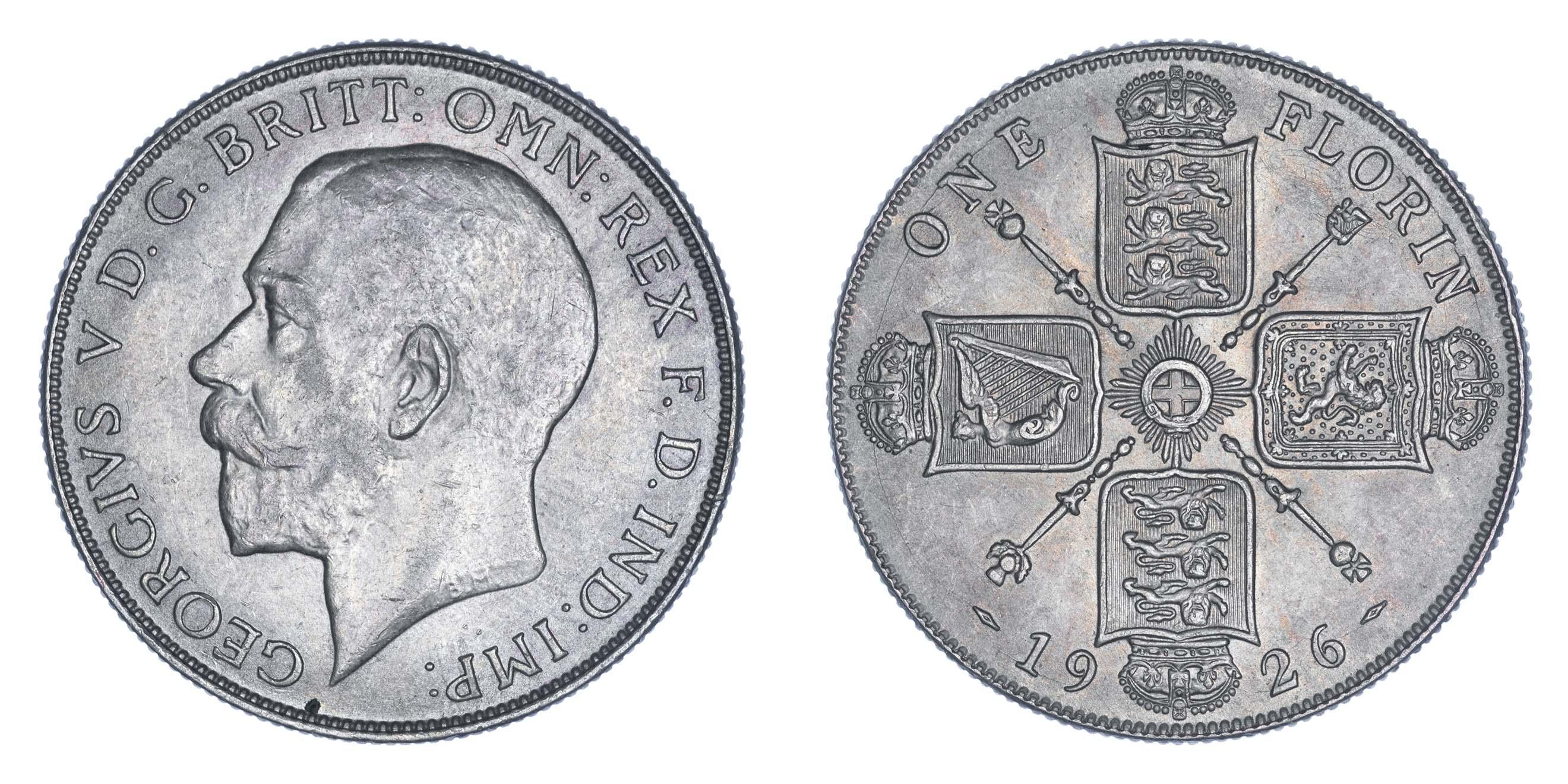
Agree. I would buy the bottom coin (and not only because I don't like slabs). There seems to be some wear to the hair on the obverse on the slabbed coin. Here's mine, in case it's of any interest.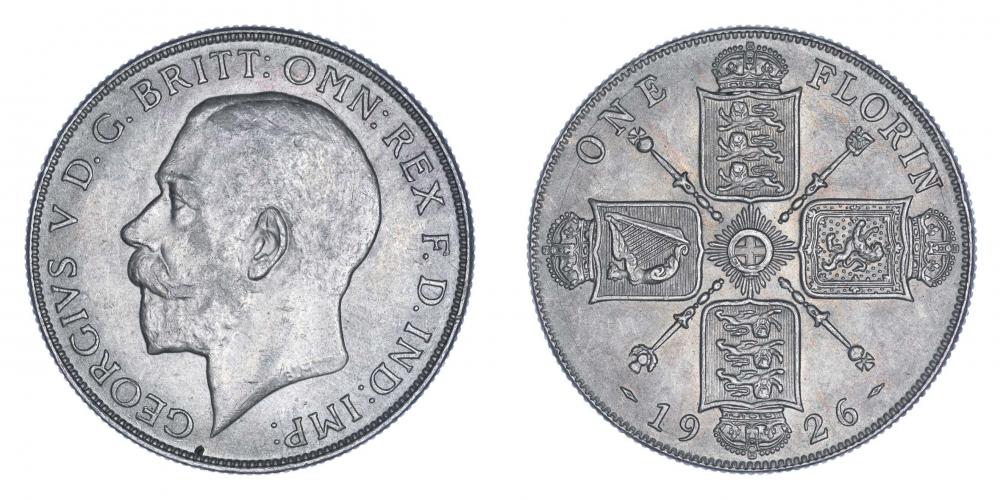
-
TICKET CENTRAL
david.bordeaux replied to Rob's topic in British Coin Related Discussions & Enquiries
MASS, Prof. Jeffrey White 2x2 paper envelope.
-
The Royal Mint shop is selling a 1906 florin for... 942 pounds. Slabbed by CGS as "EF78", it looks more like a good VF from the photos (too much wear on Britannia and in the sea for it to be EF in my opinion). Even in EF, they sell for about one-third of that price. Maybe they looked at the wrong line in the catalogue and priced it as a 1905!
-
Purely based on density, a copper-nickel coin that weighs 22.5g would weigh 26.12g if made from .925 silver (assuming identical diameter and thickness). So this would support the assumption that your specimen could be silver (without proving it, of course!).
-
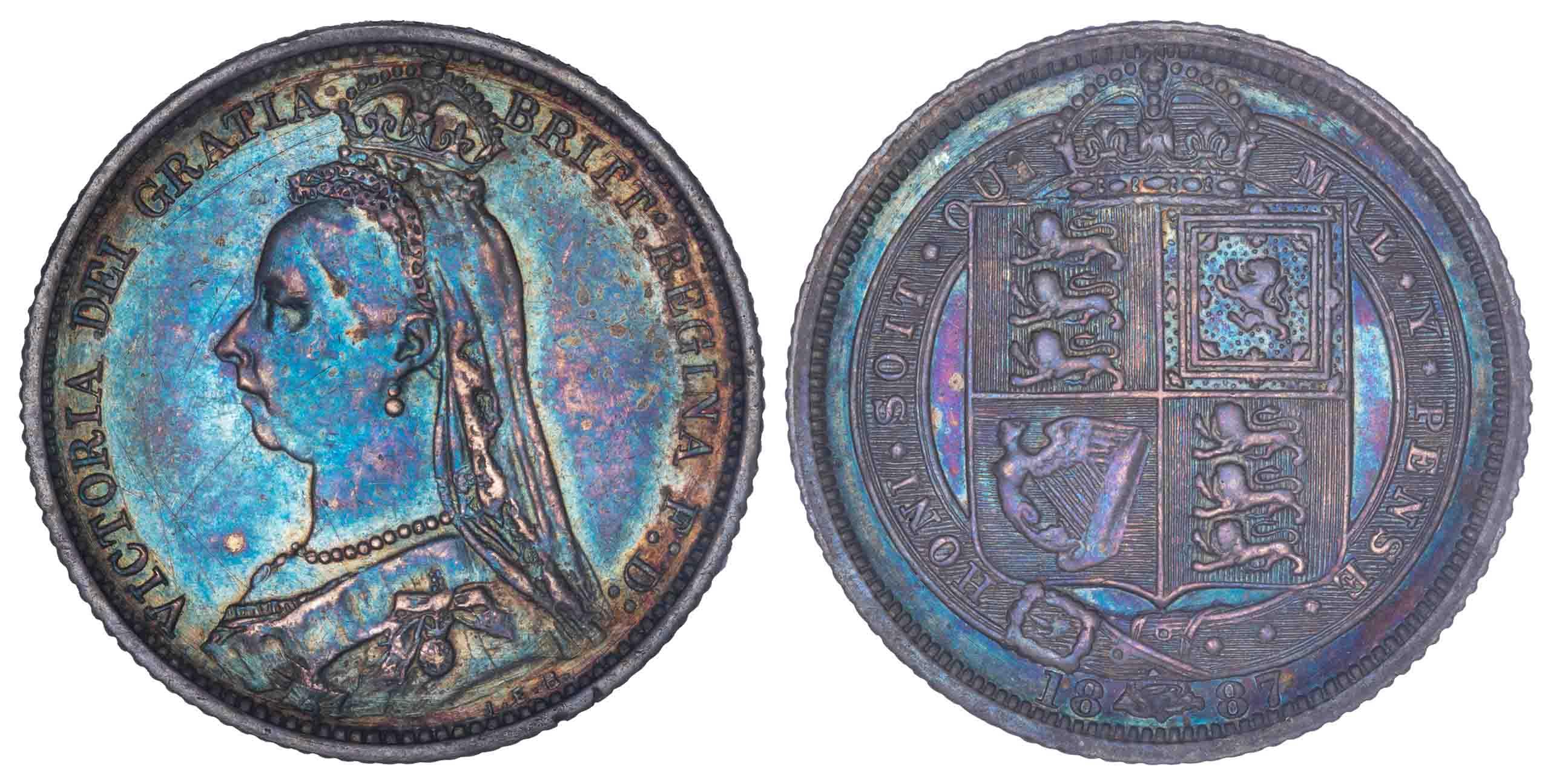
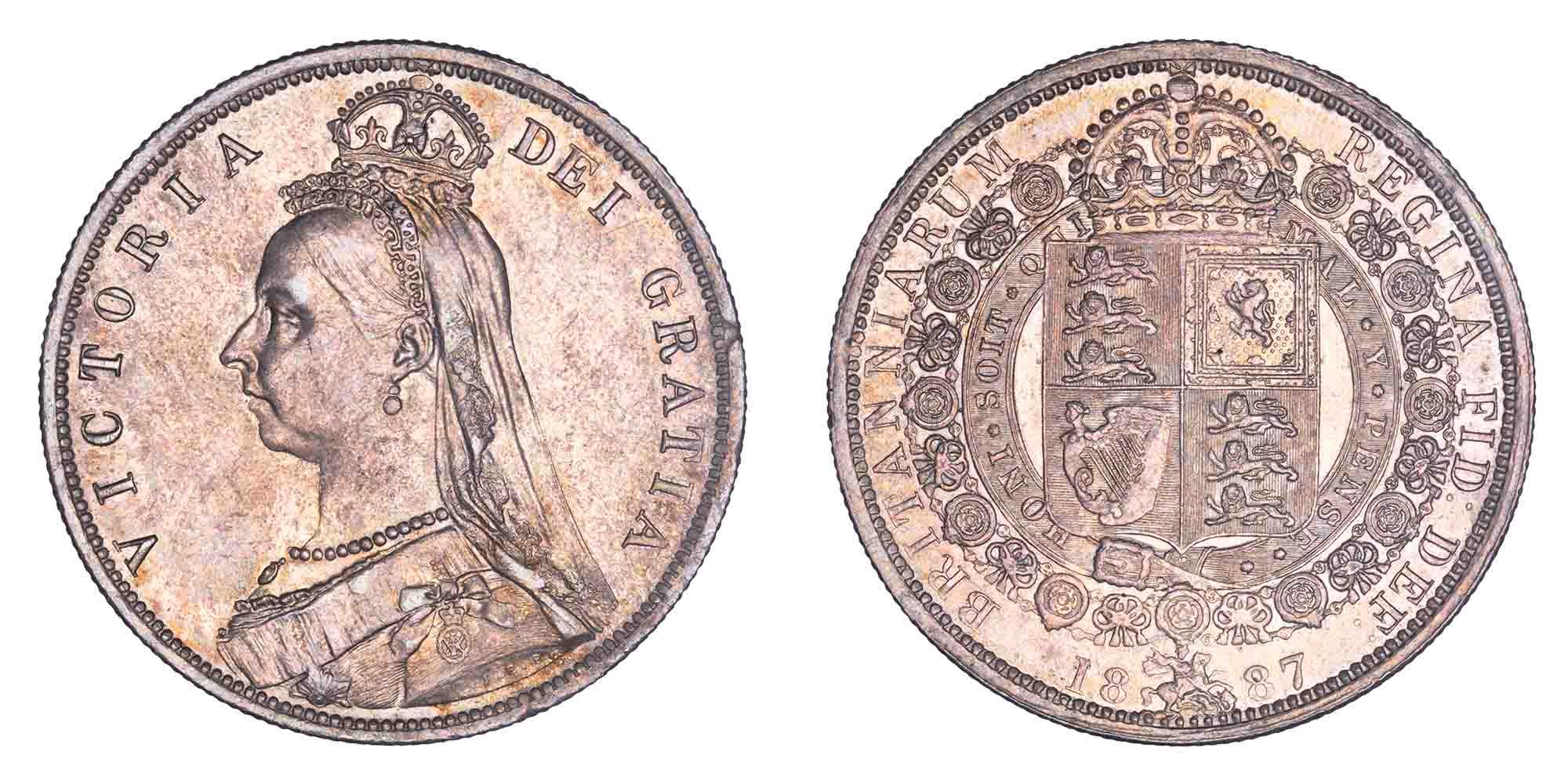
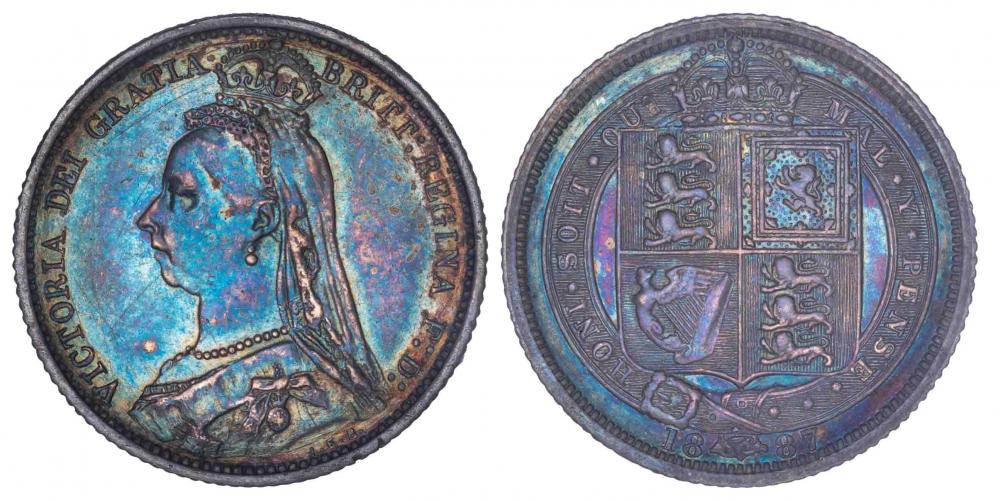
Going through some more duplicates, two 1887s stood out for different reasons. The sixpence for its vivid blue colour. And the half-crown for the quite even toning.
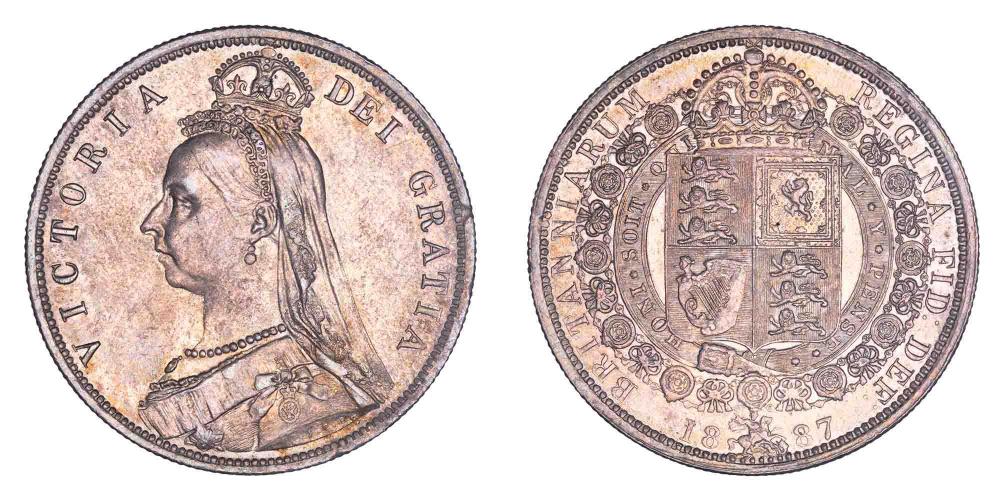
-
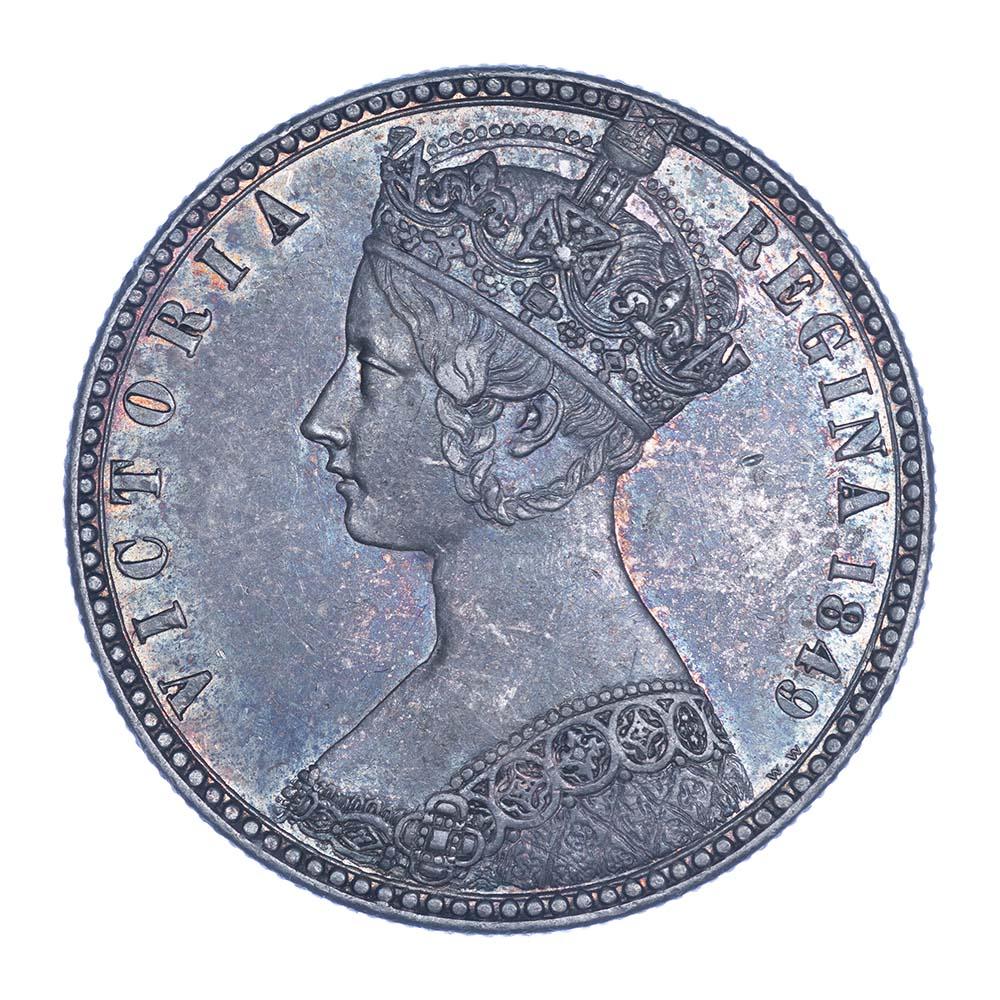
This Godless florin from my duplicates box:
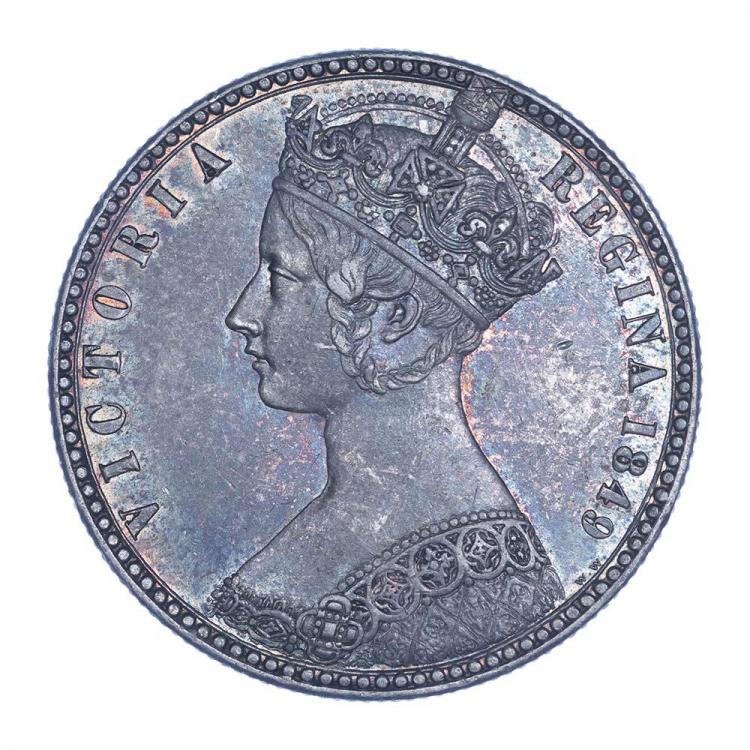
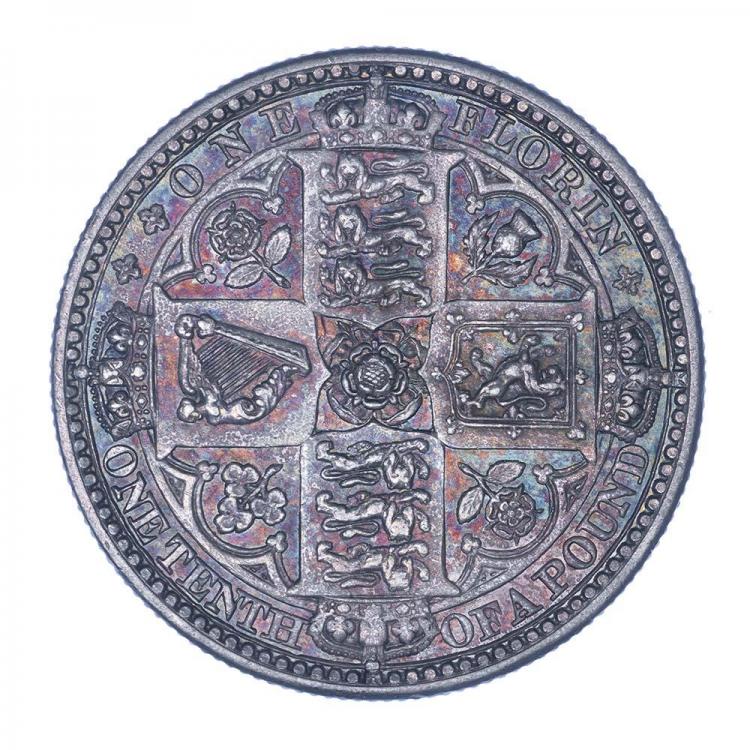
-
1852 Florin Query
david.bordeaux replied to Paulus's topic in British Coin Related Discussions & Enquiries
Sorry to come to this thread late, but I have only just had a chance to compare with my 1852 florin. The only thing that stands out to me is the line running along the bottom of the bust. I wonder if the grader thought that this was an "alteration" or "repair"? In any event, @Paulus, you have a very nice coin.