
Rob
-
Posts
12,976 -
Joined
-
Last visited
-
Days Won
387
Content Type
Profiles
Forums
Events
Downloads
Store
Gallery
Articles
Everything posted by Rob
-
Spink list three, but they are all within a few quid of each other. I don't think that any are particularly rare over the others from experience. Fine is 40-45, VF 135-150, EF 700-750 in CoE 2017. I would treat them all as equal.
-
30g is too much. Should be 28g or a midges over. 41mm is the correct diameter.
-
There are at least 4 varieties of 1750 shilling.
-
Looks like it. Many things on eBay have been similarly treated. It is one good reason to avoid the place if you don't know what you are doing. Many sellers purvey 'unc', 'high grade', 'superb' coins. Many buyers receive less than those loftily described pieces of metal. Both seller and buyer are initially happy, but the latter frequently suffers a bit of a downer once they become a bit more worldly-wise. You need to visit coin fairs and see things in hand to get an appreciation for condition and impairments.
-
If it is in mint condition and a 20th century striking it is going to typically sell for £20 give or take a bit, however the early ones would be worth considerably more in this grade. They have been made more or less continually since 1780, so the majority are modern restrikes. There is just over 3/4oz of silver in them, so an intrinsic value of just under a tenner at current silver prices. Paying twice that for a mint state piece is not unreasonable. If it is impaired though, I wouldn't bother full stop. 10 years ago the note in Krause said the mintage was up to about 800 million for all issues. There are sites which go through the variations, but the one I was using now gives a 404 error message.
-
They would suffer wear just like any other raised feature.
-
Yep
-
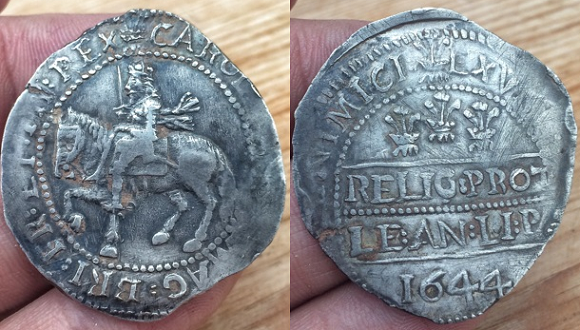
Here is both sides, cleaned up a little. Super portrait of the king.
-
Impossible to say. The other letters appear to be partially blocked, so there is no reason to assume the presence or lack of crossbar. Unless a coin is near to as struck and crucially, well struck, the jury is always out regarding inverted Vs because as the crossbar was often an addition, it frequently appears weak and is often the first feature to fill.
-
Probably the former, but I wouldn't lose any sleep over it. The following O is also doubled. but not the N
-
The mark above the head is an attempted piercing. That will put people off given the number available in undamaged condition.
-
Double the money will get you a mint one.
-
To elaborate on the previous post, the lines on the coin in the image two posts previously will be seen to be incuse under a glass. This is because the abrasive will always remove metal. In the case of polished dies, the lines on the coin will be raised because the metal has been removed from the die leaving a depression which gives a raised feature on the coin. Effectively it is just additional detail. See image below where there are clearly raised lines in front of the face. The light source is from above.

-
I would say the reverse was better than VF because you not only have the crown band detail showing well, but the ridges on the central lis fleurs aren't worn either. The obverse looks about the VF mark.
-
Take two coins of similar age and worn appearance - say a 2p from 1971. Use one as the control and rub the other with a pan cleaner or similar. Recheck surfaces. It will be obvious. The lines are many and parallel. Circulation will give plenty of surface marks, but they tend to be only one or two for any one abrasive event and the orientation of the coin will be different on each occasion.
-
Always a good feeling to get a coin from where you were born or where you live.
-
Great. Saxon next William II, Henry I and the anarchy is a bit of a bugger for nice ones though
-
Welsh Marches is highly likely to be Hereford in my opinion. Cast your mind back to the 5th February 1643/4 when Rupert was made President of Wales. That gave him overall control of all Royalist activities in Wales and the Welsh Marches, i.e. Chester through to Chepstow and all places west thereof. When the 1644 declaration die was made at Chester, the reverse mark used is an abnormally large plume, though the obverse retains the three gerbs and a sword signifying Chester. The same style plume is also seen on the unite. A further use of the large plume is on the Welsh Marches 2/6d, albeit very crudely engraved. I'm sure that Rupert took the Oxford 1643 reverse 23 die to Chester either on his visit following his appointment when he met Lord Byron on 10th March (but left on the 11th to relieve Newark), or on 16th May when he visited before the York March. I favour the former as it is quite conceivable that the die was brought to pay the accompanying troops in March, but as they were ordered to leave the following day there was no time to cut the die. Had that die remained at Oxford until May I feel certain it would have been recycled given the enormous output in conjunction with the Oxford Parliament which sat from the 22nd January 1643/4 until it was proprogued on the 22nd April 1644. They made 3 dozen or more dies in that period to cope with the large influx of personnel. After the York March Rupert returned to Chester, arriving on the 25th July with a view to recruiting further troops from the Welsh Marches to replace those lost at Marston Moor. Enjoying little success, he left on the 20th August for Bristol which he reached a few days later. As commander of the troops now both in Bristol and Wales etc, he would also have responsibility for mint operations. The Welsh Marches halfcrown has a Bristol style declaration, so the engraver was certainly familiar with the peculiarities of the mint. Both Bristol and Hereford came under Rupert's control, so I believe that they were struck at the time noted by Besly who records a lost document detailing how 'Rude the Coyner' struck coins from 277 ounces of plate in October-November 1644. This timing matches exactly the return from Pembrokeshire of Gerard's 3000+ troops following the shutdown of hostilities for the winter. He arrived back in England in early October, eventually wintering over in Monmouth and the surrounding area. The most direct line he could take would have been through Carmarthen, up the Towy valley and around the edge of the Brecon Beacons to Hereford. The presence of a few thousand newly arrived troops and a man making coins cannot be a coincidence. There will have been an unquantifiably larger number of coins struck than the less than 600 halfcrowns possible from the 277 ounces, but its value lies in establishing mint activities at a place and point in time. Prince Rupert ceased to hold the title President of Wales following transfer of the Welsh and Marches troops to Prince Maurice commencing the 1st December 1644 when he set up his headquarters at Worcester. I therefore believe the WM coins to have been struck within the 10 month timeframe available and that location was Hereford. Another point to consider is that the nobles provided and paid for their troops and other staff. It is therefore possible that 'Rude' is in fact 'Ruud'; a foreigner from the Low Countries that was employed by Rupert on his home turf. Punches and other tooling could have been imported with him, meaning a spot of difficulty in matching them to dies made previously.
-
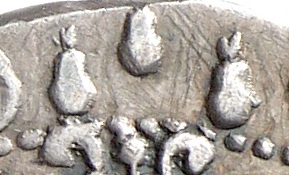
Hawarden is my preferred choice. Hawarden is 5 miles west of Chester and was in Royalist hands for all bar a few days throughout the war. Crucially, it was also on the road from Mostyn to Chester. Mostyn was where the first contingent of Irish troops under Sir Michael Earnley disembarked around 18-20th November 1643, recapturing Hawarden from Myddleton's parliamentary force on the way to Chester. There are two other HC options in the vicinity - Holt and Halton castles, but Hawarden alone has the necessary body of troops required to justify striking a lot of halfcrowns. 2500 Irish troops couldn't be paid from petty cash, though there is no documentary evidence I am aware of to say they were definitely paid prior to the replacement of Lord Capel at Chester on the 6th December 1643 with Lord Byron. The latter did report to Charles that he had ensured that each common soldier was given food and lodgings, a new suit and half a crown. It may also be pertinent that the locals in Chester were unhappy with the arrival of so many Irish troops, so there would have been a reason to keep them outside the city. The Coat of Arms of the Earldom of Cheshire was three gerbs, note the distinction from those of Chester which additionally has a sword as seen on the CHST below and declaration halfcrowns. If you look at a well struck up mark on the HC halfcrowns, they could equally be construed as three gerbs. See pic below. The punches for these appear to be the same as those used for some of the lion claws on the York reverses. The detail of the HC halfcrown is very much in the style of Thomas Rawlins, and there is some indication of a possible TR monogram signature on the York halfcrowns which are after all a 'Briot' style, though as Briot's understudy, this could equally apply to Rawlins. If you consider the rendering of the horse's mane on the type 6 & 7 halfcrowns at York, they are essentially the same as the HC horse's mane, so I would say it is odds on the same engraver. If you compare them with the York 1C halfcrown for examlpe, they are like chalk and cheese. As I think Rawlins was at York until the autumn of 1643, and the troops arrived from Ireland in the November, this planned in advance, there would be ample time for Rawlins to make the journey down to Chester. As I noted in my article, there appears to be the trace of a lion with three holes for the eyes and mouth and a leg under the O of CAROLVS. If this is just a coincidental flaw, it would be unfortunate, but I don't think it is. Additionally, if it was recut from a York die, there is no way it would be unused for over 2 years. What I am absolutely convinced about however, is that Hartlebury is a non-starter, being the Bishop's residence and essentially unfortifiable. And the 'siege' lasted one day.
-
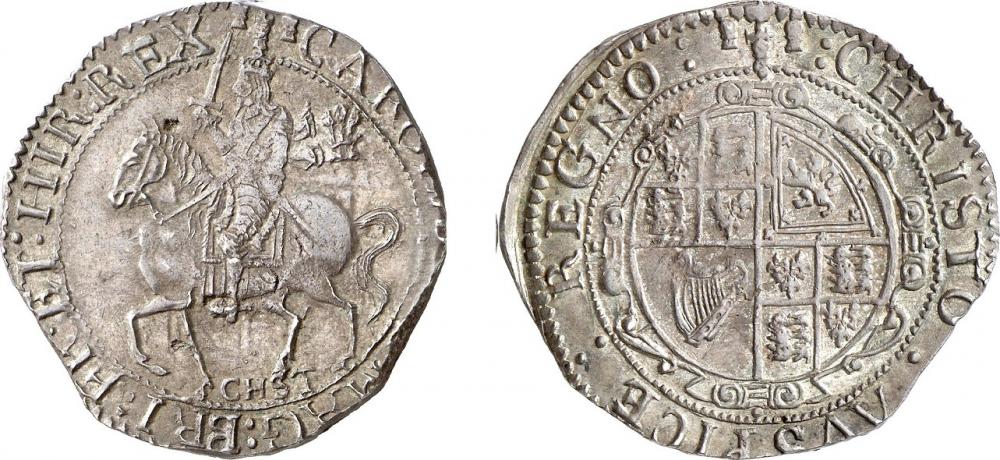
So, two likes but no discussion. If you reduce the diameter of the obverse inner circle to that of roughly the smallest that I have of the various coins in the image database, you end up with the coin looking as below. There is still a small amount of slippage on the extreme right side of the obverse, but that may be due to the obverse die having a larger diameter than the reverse die. The significant reduction in width of the obverse conveys better the amount of slippage - about 10-15%. I can show for the reasons described in the article that the obverse die must have been cut on a piece of diestock that had a larger diameter than the size of the obverse die design. This obverse die was subsequently recut to make the Chester Declaration halfcrown obverse die. I haven't been able to establish the overall size of this reverse die. I don't know what happened to the reverse die, but one favoured option to pursue is that it moved to a W/SA mint (probably Worcester) following the commission granted to Thomas Carey dated 22nd May 1644.
-
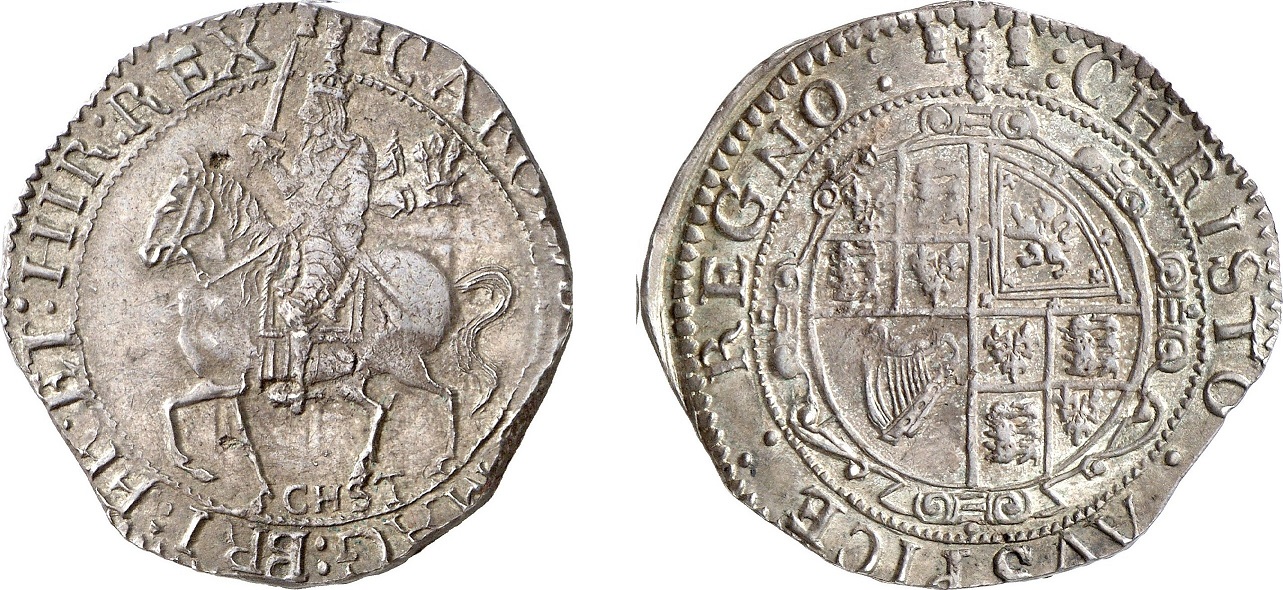
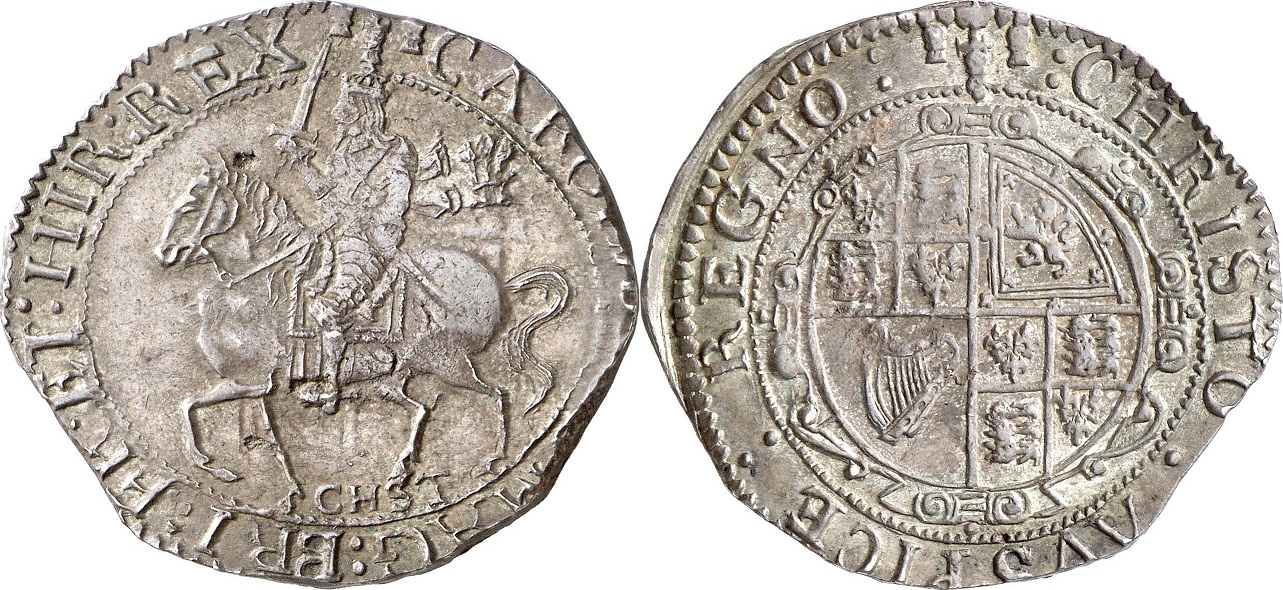
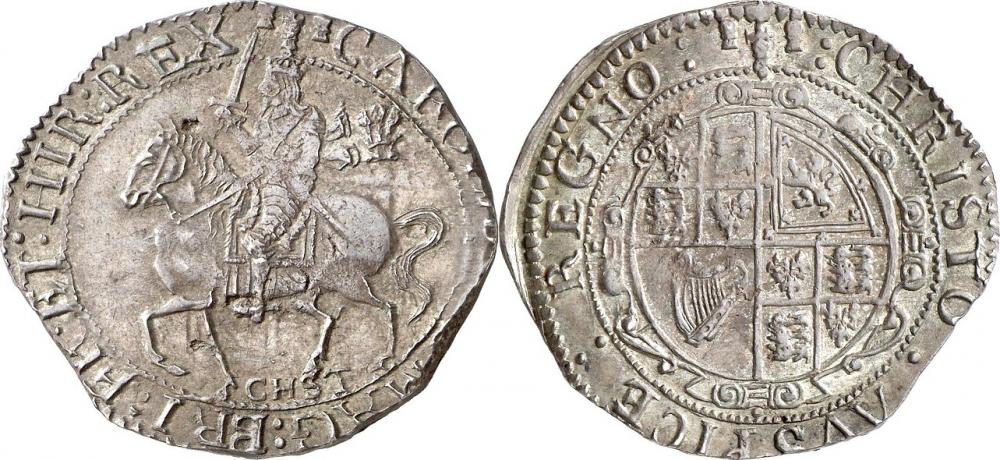
One of the subjects that has occupied my mind for a few years concerns a faulty rocker press that was most evident at Chester in 1643-4, but also appears at other locations. In all cases you have a consistent size of design on one side and a varying size on the other. This was the subject of an article I wrote in the Circular for January 2014. In the case of the CHST below halfcrowns you find that the reverse inner circle remains a consistent size, whereas the height only of the obverse inner circle is constant whilst the horizontal dimension varies considerably, the circle varying from nearly round to fairly eliptical as seen in the image below of the current Spink plate coin. By measuring the height and width ratios of the inner circle dimensions on both sides and with reference to each other, it can be shown that there is no variation in the vertical height at the widest point, so the horizontal displacement variation has to be due to a slippage in the rocker press mechanism. If both sides of the coin appear to stretch in unison then it is not indicative of a faulty press as it could be down to the dies. The stretching is clearly seen in the relative shapes of the letter R on the obverse. The R of BR at 6 o'clock is normally formed, yet the two Rs in HIR (sic) and REX are slanted, but the same punches would have been used for all three characters. Other halfcrown issues to show a displacement in one side of the coin relative to the other include the Chester declaration and prostrate gerb, HC and 'Welsh Marches'. This is quite useful as it is possibly the only faulty press meaning a chronology can be established. In the case of the two other Chester issues the location is not in question, however, the location of 'HC' and 'Welsh Marches' has not been positively identified. Firstly, the myth that HC is 'Hartlebury Castle' needs to be debunked as the place was no more than a large house, unable to be fortified and the 'siege' lasted for one day only in May 1646. This is fairly incompatible with the production of a siege coinage. It is also inconvenient that dies which use punches from York would be lying around for over two years. 'HC' therefore appears to be an earlier issue, and given there are coins showing the same slippage seen on the CHST below coins, suggests a timing not far removed and a location which may or may not be close by. In the case of the Welsh Marches coins, there appears to have been an attempt to eliminate the slippage because the two dies are set in a position such as to never be seen aligned, and the amount of slippage is reduced. Discuss.
-
Any deviation from the required character is an error. As we can assume the error was not intentionally made, by extension it follows that the underlying character could quite literally be any of the punches at the engraver's immediate disposal. Although there must be a greater likelihood of the correct character being used but entered incorrectly, it does not follow that it is a given.
-
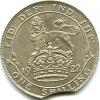
Scarce 1964 sixpence
Rob replied to Gary1000's topic in British Coin Related Discussions & Enquiries
I thought that, but it is an odd thing for a casual person to have loose. There aren't that many singles of E2 maundy floating around. -
The thing with trial strikes is that they are a bit of an unknown. If you look at the decimal patterns of the late 1850s, many of the flans laminated. The striking pressures will be different for the previous issue of copper pennies compared to that required for the thinner bronze equivalent. In the case of the 1/20th of a shilling pattern halfpenny, all known examples have this defect as does the unique F689 and probably other things struck on a flan of similar thickness. What cannot be known or appreciated by the layman is the number of unpublished failures suffered before they got it right. Anything that failed to make adopted status will be frozen in time, so a cracked die remains just that.