

Rob
-
Posts
12,963 -
Joined
-
Last visited
-
Days Won
381
Content Type
Profiles
Forums
Events
Downloads
Store
Gallery
Articles
Everything posted by Rob
-
fire damage?
-
Literature recommendations
Rob replied to TomGoodheart's topic in British Coin Related Discussions & Enquiries
Sorry, not a lot, there's Mantegassa (Spink 113). All the must haves I would recommend are over 40 years. The only crown sale that just makes it into the time frame is Cooper, though I note you have gone back in time with Whetmore. Crowns are easy enough to find illustrated all the way back to the 19th century, but anything small had to be really good or particularly rare -
The problem for the mint making a profit is that the only customers are going to be countries that are too small to support their own minting facilities. With that comes small production runs. If they were making coins for large countries it would be easier to make money, but when your target customers are from countries with a few million at best, it isn't so easy.
-
No, just saw a note which referred to a sale. Will try. Thanks.
-
Thought I might as well give catalogue searches its own thread seeing as it is a recurring theme. First up, does anyone have a copy of I S Wright sale 122, 15th Dec 1998? Lot info required together with any footnotes if you can for lot 3648 please. Hopefully someone in Oz will have a copy.
-
I haven't seen the figures, but weren't profits about £11m last year according to someone? If so, the taxpayer should be grateful that they are turning a cost to the public purse into an income stream. £11m is nothing. I would suggest the profit from the UK commemoratives/collectibles is the difference between a profit and a loss. Sure they get some income and profit from foreign contracts, but the UK ecomony is much bigger than those territories which don't have their own mint. If that £11m wasn't made, they would only raise it from somewhere else. In all probability leaving the commemorative trade would result in a deficit which would also have to be raised elsewhere. It's all part of the bigger pot.
-
I don't buy them, just accumulate a wide range of sizes and makes from whoever I acqure the coins from, then choose the one for the best fit. They might have come from Damian, but not guaranteed.
-
Because they are selling an ideal, pandering to peoples' insecurities and need for reassurance. You don't have to, I wouldn't either, but a lot of people feel they need the service. Virtually every business on this planet is surviving because they do something that the customer can't/won't/can't be a***d. For that there is a fee. Just think of all the consultants out there................... Every day I get three of four junk mails promising to put me at the top of Google's front page. That's either a lot of dosh, or isn't going to happen given the desire for the millions of businesses also trying to be seen.
-
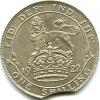
British Shilling 1911
Rob replied to pb1ake12's topic in British Coin Related Discussions & Enquiries
They are both fairly dire, so your concern about buying something in too good condition is not relevant. You aren't looking to buy an investment, nor aiming for quality, so you might as well spend as little as possible. -
-
I collect them too as I have a couple dozen criteria to fill, , just the adjective.............
-
-
EU referendum - in or out?
Rob replied to 1949threepence's topic in Nothing whatsoever to do with coins area!
Very well put. I also think the short term upheaval will pass as once we have a definite position moving forward we can plan for our benefit. Sure there will be compromises to be made, but overall it will allow us to act in our best interests. I think that the net result of us leaving would be neutral at the worst, with the freedom to actively improve our lot putting the ball firmly in our court. With that comes responsibility, but it may be that our current political operators do not have the right mindset for independent thought. In the event of us leaving, what would be needed is very much a centrist government that recognises the need for both fiscal prudence and social responsibility, Neither left nor right have a monopoly on common sense or the best way forward, playing as they do to their political allies. Funds are always going to be limited, so would have to be directed judiciously with both capitalist and socialist content - something that is currently anathema to the two main parties. The best move for society would be to get the economiocally inactive back to work, or in some cases into work for the first time. This would require more actively involvement at a local level, very much with a carrot and stick. My personal view is something along the lines of the coalition we had between 2010 & 2015 which necessarily tempers extreme policies. Maybe this requires a change in the electoral system. What is certain is that most people don't care as long as society is generally equitable to all who make the effort. If you put something in, nobody begrudges you getting something out. Trade won't stop, immigration/emigration won't stop as anyone requiring a skill set not locally available will employ the services of someone who can do the job wherever they might come from. It was ever the case. Many people I worked with in the past have relocated to the US, Australia, Canada, Europe, South Africa and everywhere between. I have also worked with a number of people who have moved to the UK based on their skill. I see no change in this. The EU is not there to serve its citizens, rather to provide a greater power base for those in charge. If it was actively pursuing a course designed to remove national sovereignty, there might be a future for it, but that would be a step too far for all those vested interests. -
I've only seen a two or three, but then that is dependent on me searching YH halfcrowns which is not that often. There was one reasonable piece as I recall, but can't remember where - it was about 10(?) years ago.
-
There will be more to find, that's certain. To work out how many we will need to know how many overcut dies there are. One of the blessings of overdates is that the change is always made by hand, assisting in establishing the number of dies extant.
-
I would think it is rarer than the 41, but the latter gets all the kudos because it is a different date and an 1845 is commoner. What people don't know, they tend not to look for. Overstruck characters are usually only found on one or two dies, so are inherently rarer. The 1841 might be a rare year for coins to be struck or dated, but the absolute rarity is likely to be the single die variety.
-
I've only got this, which was the Adams coin. He only knew of his own, but that was 10 years ago and more. Sorry, I don't bust a gut looking at YH halfcrowns specifically as I already have an example of this type. I would only perk up if something appeared to be cheap. 1845 5 over 3.doc
-
And the reverse

-
This coin amply demonstrates the difficulty of finding quality W3 coppers. P700 reading GVLIEEMVS. The 1700 halfpenny that went through Spink just before Christmas was truly exceptional.

-
EU referendum - in or out?
Rob replied to 1949threepence's topic in Nothing whatsoever to do with coins area!
No, that was the people standing on the street corners in this country selling Socialist Worker newspapers and the like, or the NF holding rallies against immigrants. One of the beauties of political activists is their natural adoption of a position of intolerance for anything off message. That's why the left and right wings make such natural bedfellows. They need each other. To tolerate the other side or give room to anyone offering a contrary position to debate would risk neutering their message. Old habits die hard. A few months ago I saw someone standing outside a mill selling some political rag. He looked exactly the same as he did in the late 70s. In fact, to bring the thread back on topic, it is no different to those in Brussels telling politicians after a referendum question that inconveniently gave the 'wrong' result to go back to their country and keep asking the same question until they get the answer that is needed to keep the project on the move. They are no better as an example of democracy. They are able to hold the people of Europe in contempt because they are accountable to nobody. If political problems could be resolved by rationable debate we would all be better off. -
EU referendum - in or out?
Rob replied to 1949threepence's topic in Nothing whatsoever to do with coins area!
I don't think many people are arguing for being totally isolationist - labour migration has always taken place. It is the control of borders that needs to be implemented. Nor indeed would trade suddenly grind to a halt if the Eu ceased to exist. During the Cold War I went behind the Iron Curtain on business. During the apartheid era I went to South Africa. The political structures of the countries was immaterial to whether we could trade or not. Goods and services were offered and paid for and everyone was happy except for the political activists. Trade with the EU would be no different. On the question of EU laws, the past couple of decades has also shown that over legislation is alive and well in this country. In the Blair/Brown years, if there wasn't a law they would make one on principle. Thanks to them you can't even fart these days without being Gas Safe registered. Yes, regulation does come out of Brussels and yes it affects everyone, but no one is reasonably saying that the burden is overwhelming. Stupid legistlation - yes, but not overwhelming. Aside from setting rules to allow free trade, there is little or nothing that the EU does which is beneficial to its citizens. You don't have to form a cozy club to be friends. If we did leave the EU,presumably the French would organise blockades at Calais - the bad news for them is that we already suffer that. If they have a grievance with anything in Europe, they blockade Calais. B****r the rule book, they act in a way that is traditionally French, i.e. stick two fingers up. We are accused of being selective in Europe. We are not the only ones. There are 27 in the queue behind us. As Jaggy intimated at the top of the thread, the EU is the wrong structure for what it wants to do. It is however, incapable of change because of entrenched vested interests. -
http://http://i935.photobucket.com/albums/ad192/RPCOINS/098 - Copy_zpsvtgbw0aw.jpg
-
http://http://i935.photobucket.com/albums/ad192/RPCOINS/097 - Copy_zpssdrgysjo.jpg
-
http://http://i935.photobucket.com/albums/ad192/RPCOINS/122 - Copy_zps1e0m044m.jpg
-
http://http://i935.photobucket.com/albums/ad192/RPCOINS/121 - Copy_zpsnmxrhz7s.jpg