

Rob
-
Posts
12,970 -
Joined
-
Last visited
-
Days Won
385
Content Type
Profiles
Forums
Events
Downloads
Store
Gallery
Articles
Everything posted by Rob
-
What's the problem? What do you expect from a 3" x 2" screen apart from bad eyesight?
-
All of them exhibit large differences. I suspect the pricing is largely down to the contributors' pet areas. Anything outside someone's comfort zone is a case of seeing which way the wind is blowing and applying an adjustment to the previous numbers. I would say that applies to all. As far as pricing goes, the changes at the top end are not that fanciful. People are paying big bucks for specific items.
-
OK, sorry. I was going on what I was told when looking at some other coins of his that went to the BM.
-
The most likely candidate would be J P Morgan. He went down with the Titanic and his children donated a large number of coins to the BM in 1915. Prior to that you would be looking at Murdoch, Montagu, Bergne, and a few others, but no time to look.
-
William Forster, Sotheby 28-30 May 1868, English, 390 lots. Webster was a dealer, so no collection.
-
This is a much revisited topic. I'm not sure why people are so dismissive of Spink's prices. Nobody has a monpoly on accurate numbers. Not all things are overpriced in Spink. The further back in time you go the better they resemble the market. Using ebay listings could be interesting. 50p washers for 100 quid on ebay - not an uncommon occurrence and something guaranteed to skew the data. A 50 pound item going off at 3 in the morning may well sell at 99p - again skewing the data. Auction houses have as much variation as eBay too, with the sale presentation and contents having far more influence than the reference volume prices.
-
Why expect someone to pay vast sums of money for a numberplate when Halfords do them for £15.99?
-
yes, and genuine
-
I suspect his idea of a realistic offer will be at odds with the rest of humanity. £10m BIN is just silly.
-
It's obviously the same coin as it has the same surface marks, but the colour is an improvement. PS. Why does everyone have to be addressed as @ when they already have a username which is sufficient to find them? Damned fashionable trends. Indifferent emoticon required here.
-
If going down this route then tell them why. It might result in a few extra bids if there is a good cause. Prior to Whitton's sale in 1943 the catalogue reminded bidders that the funds were to pay for his medical treatment, therefore would they please consider bidding an increment higher than they would otherwise do.
-
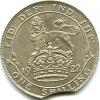
Charles II, 1677 sixpence. G over O in MAG?
Rob replied to jaggy's topic in British Coin Related Discussions & Enquiries
I suspect that the G is either a defective punch, or a composite made from C and the downstroke. The profile of the top of your rev. G is very similar to the style of the C seen on the obverse of the last attachment. Alternatively, if the punch is badly worn then you might see a progressive thinning of the letter as this process develops. -
Is 'no signature' a significant problem given we know the person concerned from their id and avatar? Surely a link to somewhere could be incorporated into a member's profile rather than cluttering up the post?
-
Or get them into LCA next time round. The cut off for submissions is 7th Feb. The money would appear by the end of March, which is likely to be a bigger number than that from ebay listings. Realism is the key here.
-
Charles II, 1677 sixpence. G over O in MAG?
Rob replied to jaggy's topic in British Coin Related Discussions & Enquiries
Maybe the mint didn't have a serviceable G punch in 1677? Any later sixpences with defective Gs on the obverse - suggesting the die was made in these this year? So far we have the odd letter only on dies dated 1677, so maybe it was a punch used in an emergency until they could make a new one? The upstroke of the G looks like a later addition, so G over ? cannot be ruled out. I just find it surprising that the letter could be made from two punches with such reproducibility of displacement of the second. -
It is like every other unsubstantiated statistic, it is frequently in error. Bearing in mind the first edition was in 1949 and the previous was 1992, none of the rarity figures could be substantiated using a search of the net to inflate the sample size. You are therefore left with gut feeling as the final arbiter. Probably of more use would be the English Milled Coinage 1662-1972 written by Cope and Rayner in the 1970s which does at least give rarity numbers vs. grade. FYI the 1746 LIMA halfcrown is given S(carce) and R(are) for EF & UNC
-
Charles II, 1677 sixpence. G over O in MAG?
Rob replied to jaggy's topic in British Coin Related Discussions & Enquiries
Can you find a good G from 1677 onwards? It would help to know when the dies were derived from a master and not just punched into the working die. Was this method employed from 1662 onwards, or introduced later? Gut feeling is later based on the uneven legends seen in the recoinage of 1695-8. -
Charles II, 1677 sixpence. G over O in MAG?
Rob replied to jaggy's topic in British Coin Related Discussions & Enquiries
I feared that might not give too much info because the obverses can be used year on year, whilst the reverses need to be worked on if they are to be used with the following year's date. What do 1676 and 1679 reverses look like, and do all reverses for these two years show the same feature? -
Charles II, 1677 sixpence. G over O in MAG?
Rob replied to jaggy's topic in British Coin Related Discussions & Enquiries
I agree it does look to be the same style, so could it be the conventional way of entering a G at that time given the dies are different? It is so similar that it could be a single punch. The upright of the G looks to be hand entered on the 1678, but to get it so reproducibly misplaced is unlikely. What do the obverse Gs look like at this time? -
That seems a little condescending given his lack of popularity. Either that or a full blown brown nose job?
-
Charles II, 1677 sixpence. G over O in MAG?
Rob replied to jaggy's topic in British Coin Related Discussions & Enquiries
G over O, or the more likely G over inverted G? It looks like there might be some evidence of an inverted G at top left. Inverted letters should be the first point of call IMO given the engraver has gone to the trouble of selecting a punch. It's much easier to place the correct punch upside down than to choose the wrong one in the first place. A bit like the OAROLVS legends found on small silver in Chas.II which is a C over a rotated C, thus giving the impression of an O. -
One for the farthing boys
Rob replied to azda's topic in British Coin Related Discussions & Enquiries
The cut off date for vendors is the 7th Feb. They will be taking lots in at both Wakefield on the 31st and London the following week. It all depends on whether the sale is a collection or general items. Collections can be held for a year or more before coming to market. General sales include lots that the general public leave, and so filling the sale is in the lap of the gods. -
Unifaces from the mint are usually made with properly prepared blank reverse dies. i.e there is a rim of sorts, even if no design. Trials from unfinished dies may also be made, but tend to be in lead or similar soft material as the die has not been hardened at this point. A perfectly flat surface on the blank side is much easier to obtain by rubbing down than replicating some vestige of a rim which you would expect as whether uniface or double sided it always has to be struck in a collar to prevent spreading, and so you would expect to see flow into the gap between collar and blank die (which would never be practical to use if a perfect fit without any tolerance).
-
Let's See Your Toned English Milled Silver!
Rob replied to Paulus's topic in British Coin Related Discussions & Enquiries
If that 2015 coin gets slabbed without being rejected as ATed, then by logical extension it has to be genuine and so someone at the mint should get a grip on handling and quality control. Somehow, I don't think that's the problem. Surely a coin that is 13 months old at most, but potentially less than a month old should ring alarm bells when it is presented in such a condition? That really is a case of head in sand. -
Why would you get it slabbed? Unless you have a suspicion that it isn't genuine, authentication is not necessary, and in any case the TPGs don't get it right all of the time. If you really want it authenticated then send it to the Royal Mint. Slabbing may or may not improve its value. I suspect that with 2p pieces not often collected, the fact that it is in the original packing would help. Personally, I wouldn't break it out.