
Rob
-
Posts
12,976 -
Joined
-
Last visited
-
Days Won
387
Content Type
Profiles
Forums
Events
Downloads
Store
Gallery
Articles
Everything posted by Rob
-
Assuming there's a pellet after REX, which isn't clear in the image but has the space for one, then it would be Withers 30a. This is the only Withers 30 not ending A. Other details above are correct.
-
Confirmation of Dies Please
Rob replied to Kipster's topic in British Coin Related Discussions & Enquiries
Hmmm. The thing that stands out most here is the different positions of the two As to left of the lighthouse. The grotty one appears to be well circulated and presumably genuine as nobody would counterfeit a coin with a small A by the lighthouse when the majority of examples were bereft of any mark. The high grade one looks genuine too, so where does that leave the letters being a means of die identification? Back to the drawing board? The obvious inference is that not all As are equal, so with multiple dies extant, the letter must refer to something else - week, coining press, metal mix? -
No idea as I haven't looked, but presumably only this reverse die or maybe an unknown second one. It's a die match to the one in Bull once you have sorted out the double striking. As a tun 3a1 variety it's bound to be rare as there are huge numbers of single stop dies with only a handful of 4 pellet stop dies to add. I would have thought the survival rates would be similar to other die pairs unless there were indications of a rapid disintegration (or a mint fresh hoard came to light), but don't know what that number is. There were examples in the North Yorks Moors and Tooze collections in DNW's archives.
-
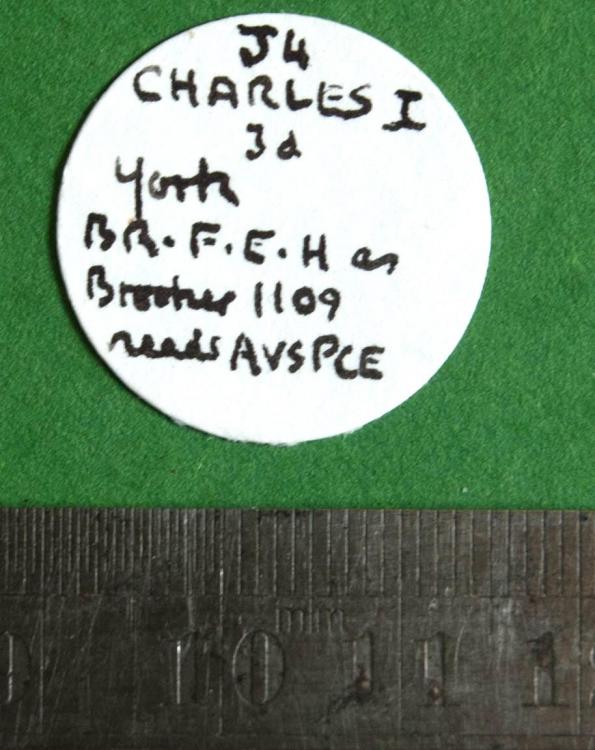
Did anyone buy anything from the Sanders collection at Noonans on the 19th July? If so, did it have a ticket resembling the attached? Ta.
-
A report on how you get on would be useful. Aside from the good search facility, one of the real advantages of this forum is the indicator of which threads have posts you haven't read - and it goes to the first unread one with a simple click. Or alternatively, the new thread indicator which again goes to the first post. If you have to scroll back up through days of posts to get to the point where you last read, I can see an awful lot of things being missed, not to mention the need to separate out the different topics, which appears to be a major issue if replies get buried.
-
I think that sums up the biggest problem with FB. I might go a week without looking at the forum, or on other occasions visit a few times a day. Not all of us live on our phones, so difficulty in finding old posts and replying is a bit of a negative.
-
Is the restricted scope generally typical of FB? The above all have specific fields of interest unlike this or other forums. Is there anything with unrestricted cover? As Richard notes above, there are a few well known names about, but if the scope is limited, then it seems a wasted opportunity. Realistically, when dealing with more knowledgeable minds, you would probably be better speaking at a fair, phoning or emailing, which trumps any forum/group discussion which tend to have short posts because many people can't be bothered formulating or reading lengthy replies. From a personal perspective, I regularly end up discussing a query for anything from 10 minutes to an hour because few things are that straightforward.
-
Posts are only any use if they can be retrieved. Is there a search facility on FB? I ask this because the wife has used it but when she says I should look at this post - she can't find it because life has moved on and there's been a zillion replies, mostly of vacuous nonsense.
-
That's not too surprising, as everyone wants to make a quick buck and education improves decision making, which is unhelpful for sales in most instances. A comparison between rare as in half a dozen known and rare as in only a million struck puts things into perspective.
-
Most guesses of surviving numbers are underestimated, relying to a large extent on personal experience, which is a bit hit and miss as you can't pick up everything. There is no central database of coins, so you will almost always revise numbers upwards. The only exception to this is likely to be for cases of mis-identification where one type will reduce and another increase. Patterns and proofs are a bit more quantifiable. Additional examples from known dies can appear at any time, just as new die pairs appear on a regular basis. We only have a fraction of the story.
-
Yes, but they tend to get upset when you tell them. When I pointed out to someone on CoinTalk that 'I collect coins, while you collect opinions', he got a bit miffed. Diplomacy has never been my strong point, so if someone could enlighten me on how to call a spade a spade without offending, I would like to know.
-
Freeman, in response to Pies saying only the first on the list could be his coin. Hence the question whether the toning matched.
-
Different coin. None of the toning spots match, so make that 7 on the list.
-
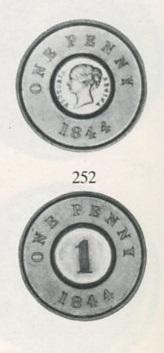
Different coin. Those pictures are a 'PENNEY' obverse, not a dated one.
-
Or one not on the list. In the absence of any documentary evidence, does it match the image?
-
Small claims court.
-
has there been a software change?
Rob replied to Peckris 2's topic in Forum technical help and support
Right. I'm p'ing in the wind having spent all day trying to rectify this and got nowhere. Only being able to access the last page of everything is unworkable as even past PMs can't be opened. It appears to be specific to this forum, as others allow me to view past pages. I'll ask one of the kids to look at it at Christmas when they come home. In the meantime, if anyone wants to contact me, please use either the contact link on my website or email me if you have the address as forum notifications of any messages may or may not work. -
has there been a software change?
Rob replied to Peckris 2's topic in Forum technical help and support
If you try to type a page number in it gives a message 'This form is not secure. Autofill has been turned off'. Presumably the issue is with google rather than me. If so, that's a shot in the foot as they can't track my wanderings - there not being any. Every cloud etc..... -
has there been a software change?
Rob replied to Peckris 2's topic in Forum technical help and support
Must be something wrong with my end then. Not to worry, as it will eliminate wandering through previous posts and make me more productive. -
More likely polished
-
has there been a software change?
Rob replied to Peckris 2's topic in Forum technical help and support
Does anyone know why the page buttons aren't working on any threads? Have we had a software change because I had a couple of random request asking if I would accept notifications? I blocked it because they come through automatically as far as I'm aware, or at least have up to now, so either gremlins or someone phishing. -
I thought you'd ask for that - the original image is 551K, so had to reduce it. There's potentially something to ponder here, namely is 29 a knackered 26? The lis are not well struck up, but overall is somewhere between 26 and 29 - say 27.5! The top lis have full arms, so are 26, but the bottom ones show some sign of degradation, but not a full 29 as yours.

-
I bought the 1566 dated coin with the two different lions in the Comber sale (ex RCCB) which uses the same obverse die. Thus it is reasonable to assume that this obverse die was in use at the turn of the year and your reverse may well be the first 1567 die.
-
Not in English either. Why are so many people bi-lingual? Something purporting to be English as their first language, with occasional diversions into English.
-
Will we ever become a cashless society?
Rob replied to 1949threepence's topic in Nothing whatsoever to do with coins area!
I don't - they stopped selling bread a few years ago, and bread is the primary reason I walk to the shops every few days, with additional items purchased subject to the limit imposed by the backpack size.