

Rob
-
Posts
12,976 -
Joined
-
Last visited
-
Days Won
387
Content Type
Profiles
Forums
Events
Downloads
Store
Gallery
Articles
Everything posted by Rob
-
 Could be a coin weight given the shape, or just a weight for scales
 -
That isn't right.
-
I also feel I have nothing to add to most threads, The underlying die doesn't have to be a shilling
-
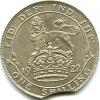
In that case it's genuinely wrong, which I suspected as the surfaces look cast. The weight should be 1.4 to 1.5g approx. The weight will vary, but not by a lot. e.g. the one below weighs 1.45g.
-
Displaying your collection on the interweb
Rob replied to Paulus's topic in British Coin Related Discussions & Enquiries
Ah, the transatlantic invasion of words that invariably seem to be a little 'wrong' - such as ebay's or amazon's use of 'buyer/seller experience'. Globalisation has created many such incongrueties of which my favourite is probably the Mitsubishi Starion. Given the other two models were the Colt and Lancer, this had to be a misprunt based on a Japanese person interpreting a fellow countryman. -
The look suggests to me it might be a copy despite being battered. What's the weight? Clive will be up to date with all the copies of PAXS pennies. If a copy, then south of the couple pounds it costs to get one in a museum shop, if genuine a couple hundred at most because the mint isn't legible. The surfaces don't look good.
-
Displaying your collection on the interweb
Rob replied to Paulus's topic in British Coin Related Discussions & Enquiries
No idea, but using phrases like that are presumably Chinese? -
It's just part of life's general trend. Given there are few easy options that haven't been tried, the only way to stand out is to become ever more eccentric or outlandish. As someone who grew up in an era when a pub crawl involving 15 different breweries' ales meant visiting 15 different establishments, the concept of having 15 variations of the same basic cider on the same shelf seems a bit strange and smacks of the marketing man trying to override the pleasures of trying different companies' products. As cider must have a legal definition, presumably these are just flavoured concoctions? Rhetorical question, but what was wrong with dry, medium or sweet?
-
Empty barrel.
-
Probably because the question of reused dies has been addressed here before? Adding a reply along similar lines is akin to a typical academic paper where previously published facts are repackaged and then regurgitated, all from the need to publish a paper in your own name. It is very difficult to continually put a new slant on a topic, and as for adding new material every time then forget it. This is a recurring problem for me at places such as our coin club because I struggle to find sufficient new material to talk about that can't be found elsewhere. There is no way I can do a talk more frequently than every other year without repeating myself - which would bore people. Anyway, to address the question. There is plenty of evidence to suggest that diestock was reused time and again, with perhaps the most obvious example being the Exeter shilling that went through DNW a few years ago which had 2 nearly full reverse designs visible. There is no practical reason why a die would need to be melted after use as it is not a precision piece of engineering, being just a length of bar with a design engraved on the end. Of greater interest would be the identity of the underlying die. A reversed N should be quite easy to find when it comes to narrowing down the die options.
-
Splendid, another subsidiary living under the corporate iFault banner.
-
First look I thought it was more a case of copper farthing - no copper. Maybe they are pretend stops?
-
Copulative omega Thanks for that. Now I can sleep happy !!! Moneyer mark perhaps ? The copulative was issue dependant some have omega and some a bar. The moneyer mark was his name
-
The Elusive 2002 Jamaica Proof Set Remains So
Rob replied to VickySilver's topic in Enquiries about Non British coins
I could sell you a 1971 set, but I guess you don't want to know that - and a Trinidad and Tobago, and a Bahamas.. -
Copulative omega
-
Done that, but it doesn't seem to make any difference. I also flagged the daily crap from Photof****t as spam, but that doesn't seem to do anything either. It comes from the 1&1 who host my site, so probably can't do much about it. I have no idea how to block individual addresses.
-
This email, or variations thereof, has been a pain for several months now. Arrives without delay every morning at 9am. Still, makes a change from that nice Nigerian fellow. I suspect the other 3 or 4 dozen recipients are also p'd off. res.sir, sir i want a contract from your side. i give you a bulk business. i have royal ancient coins to sale. but first this 1837 ancient coins deals. ancient items to sale only not auctioned it. herewith i know you that there is lots of ancient items i have to sale. so i insist to come here because i am not capable to come there. my financial condition is not good. 1. 1 rupee coin --- 39 coins 2. 50 paisa coin--- 38 coins 3. 25 paisa coin--- 60 coins 4. 20 paisa coin--- 7 coins 5. 10 paisa coin--- 879 coins 6. 5 paisa coin ---- 801 coins 7. 3 paisa coin --- 1 coins 8. 2 paisa coin ----9 coins 9. 1 paisa coin ---- 2 coins 10. half coin ----- 1 coin 11. rare coin ----20 coins 12. ancient items-- 5 items ( 80,00,000/- pounds 13. gold coin, silver coin, clocks, locks worth 100,00,000/- 14. golden horse cart worth 100,00,00,000/- pounds thank you chintan tank 00919824984379 Email address supplied should any bot pick it up and return the favour is chintantank111@gmail.com
-
So you have two happy people - if only it was like that all the time. Some people don't worry about marks, others don't care if a coin has been cleaned, some are paranoid that their coin might have been handled in the past, some are...... you name it, someone will be exercised at the thought. None of us can stand up and categorically state that buying a coin was wrong if the two directly interested parties are happy with the deal. Very true Rob, just surprises me at times! Me too, but it isn't my money.
-
So you have two happy people - if only it was like that all the time. Some people don't worry about marks, others don't care if a coin has been cleaned, some are paranoid that their coin might have been handled in the past, some are...... you name it, someone will be exercised at the thought. None of us can stand up and categorically state that buying a coin was wrong if the two directly interested parties are happy with the deal.
-
looks good to me.
-
We have already communicated. Needless to say there is a divergence of opinions, but hey, that's why these things are so fascinating and the subject of much discussion. I suspect it will be a bit of downer if we ever resolve the issues.
-
I must be repeating myself too often.
-
To which can be added, that with letter rate postage which appears to be the maximum that buyers want to pay, it doesn't allow for any protection to be used if you want to keep within the 5mm thickness limit. So small parcel rates (which if signed for to protect your own backside), push the price up to about £2. Add on the VAT if you are registered and that is £2.40. Add on ebay and paypoo fees takes a £1 coin to £4+ for a coin that may or may not be worth a quid assuming you want to realise a return. It does beg the question 'why bother?', but the answer is of course, because you can get free listings and every so often people buy. The only winners are eBay. Royal Mail have also shot themselves in the foot with the 1" limit for large letters.
-
I have a problem with there being one or two examples known of most denominations in penny increments from 6d upwards. If you are going to have a garrison that needs paying, you will make coins of nominally the same value for the same type of soldier - that's why the majority of provincial coins are shillings and halfcrowns, this being the nominal daily rate for a foot soldier and cavalryman respectively. These sums were not cast in stone as the infantry rates varied from about 8d up to 1s3d per day depending on who was paying and at which point in the war for example. It is not beyond reason to expect that approximately the same size pieces could be produced. i.e. you would expect to see large numbers of one denomination or possibly two to reflect that the garrison was effectively composed of foot soldiers. Of possibly far more interest than the silver is the quantity of CARA copper farthings found at the bottom of the castle well. There isn't a problem with the attested provincial mints, but those with a question mark after them definitely need a lot more investigative work, particularly Ashby(?) and Bridgnorth(?). Boon's theory and attribution to these places I believe will one day be proven to be wrong. B is dependent on A, yet according to the theory, in the month long siege of Bridgnorth you have approaching 30 dies to serve a garrison of 120. The bulk of the garrison (including those who came from Ashby) left Bridgnorth on 12th March 1645/6, a fortnight before the year end and were subsequently defeated at Stow on the Wold on the 21st, so you would expect the 'B' coins to be dated 1645 - but they aren't. You have documentary evidence of coins struck at Aberystwyth mills in March 1645/6 which would fit nicely with the A coins as Aberystwyth fell on the 14th April, and given the die linkage to B, suggests that it must relate to one of only two areas where Royalist troops were concentrated in 1646 - N W Wales on a line drawn from Barmouth up to Denbigh, or at Raglan where there was a garrison of about 1000 and a very wealthy owner. Silver was in short supply at the end of the war.
-
It's a problem for most sellers. The majority of items don't sell because there are too many listings. As I write there are nearly a quarter of a million listed under coins of which 110,000 are British. There isn't time to look. So unless you find two people searching for the same item you find that most will sell for opening bids at best. That's why so many are on BIN now. Personally, I don't bother looking any more as I don't have the time to plough through hundreds of pages and only look when given a heads up these days. What used to take 20 mins is now a full time job. The fact that most go to the same person suggests that he/she is happy with what you have sold, but as long as they start at £1, then that person will continue to acquire at that price. 10 years ago or more you only had one or two thousand listings and the %age of quality listing was better.