

Rob
-
Posts
12,966 -
Joined
-
Last visited
-
Days Won
383
Content Type
Profiles
Forums
Events
Downloads
Store
Gallery
Articles
Everything posted by Rob
-
Yes please
-
And I should add that the ease with which you can sandblast a coin is why you should be sceptical about the extremely rare matt proofs which were made by the mint for photographic purposes, but whose output has been surpassed by others many times over judging by the number that appear on eBay.
-
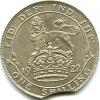
This is a VIP shilling obverse but all the other denominations are similarly designed. The head only is frosted by sandblasting, the fields are mirrors. It would be reasonable to assume that the crown is as the rest.

-
I was unsure as a result of the pictures which rarely give a true picture. The right coin will always be worth the money, even a premium in the right condition.
-
Accurately graded
-
And?
-
It's a medal commemorating the unveiling of the Bavaria statue (reverse) in Munich which was erected by Ludwig 1st (obverse).
-
Mintage Copper and Bronze Pennies
Rob replied to Gary's topic in British Coin Related Discussions & Enquiries
I don't know how long they were legal tender for, but suggest they were probably withdrawn fairly soon after the introduction of the bun heads. Admittedly they are rare, but I've never seen a very worn 1860/59 - all have been VF or a bit better. These are invariably pictured in auction catalogues and sales lists whatever the grade and in all probability were collectable in 1860. Most 1858s and 9s tend to be in good grade for all denominations too so I suspect they were withdrawn asap. You see damaged ones, but not badly worn examples that often. Also they stopped making the groat in the 1850s. 1855 is the last date in the series although it is not unknown for the mint to produce coins dated for previous years in subsequent years and this they may have done. This would have required an increase in copper/bronze output too. I don't have any small silver mintage figures, but any reduction in output could be taken up by base metal output. The output dated 1861 may therefore have been produced over a few years given the caveat above. -
Droz 1788 Pattern Halfpennies
Rob replied to a topic in British Coin Related Discussions & Enquiries
Sorry, I've only got 2 George 1st farthings. A mistrike and an R/sideways R. -
Mintage Copper and Bronze Pennies
Rob replied to Gary's topic in British Coin Related Discussions & Enquiries
Reduced bartering and token replacement? Over this period in time there was a large continuing large influx into the cities with the increasing industrial base and those people had to be paid. Silver denominations would have been too valuable for doing the family shopping, so base metal currency demand would have increased. Promisory tokens were abundant from the end of the 1700s but had to be replaced and so I assume this was to cater for a society which was increasingly cash dependant not having the facility to produce their own food. Just a thought. -
Droz 1788 Pattern Halfpennies
Rob replied to a topic in British Coin Related Discussions & Enquiries
Does it say anything about the die axis? P964 (silver plate) and P965 (gilt) in the BM come from the Banks bequest in 1818 which puts them firmly in Soho. P966 (Brown Gilt) was acquired in 1870 from Freudenthal which overlaps Taylor who started restrikes in about 1862 but as with the previous 2 has an inverted die axis. All of the bronzed pieces (6 or 7) - P967 and the solitary copper - P968 I have seen have been en medaille. Significantly, the BM did not acquire its pieces until 1926 in the Weightman bequest. I have practically as struck examples of a 965 and 968 which show considerable differences thus eliminating wear as a contributory factor, die axis aside. The globe and drapery have considerable loss of detail on the copper piece with only the top right portion showing the same good detail as on the earlier pieces. The remaining rust spots and striations in this area and elsewhere confirm it is the same pair of dies. The tip of the paddle in the exergue touches the line on the early pieces, but on the copper has a clear gap with weakness where the design has been filled in or more likely polished away. I have not yet found an as struck example of a bronzed piece to compare. Given Taylor's desire of producing "varieties" by various concoctions, it would be easiest to invert the die axis before modifying the dies. The edge reading is of good quality for both pieces. Therefore, is there any mention of a bronzed or copper piece with an inverted die axis or a silver plated or gilt version en medaille? My gut feeling is that the bonzed and copper must be either very late Soho or Taylor restrikes despite Peck's assertion that Taylor was not succesful with the RENDER etc collar. The lettering is not perfectly parallel to the edges either, although no letters are defective. -
Droz 1788 Pattern Halfpennies
Rob replied to a topic in British Coin Related Discussions & Enquiries
Let's try this one again. There must be someone out there who collects these things. All I want to know is which variety has which die axis as some are upright and some inverted. Also, some show design weakness which could be a later striking as this weakness coincides with a change in die axis (upright). -
I've just read this, and 2 minutes later been paid with one. I therefore think they are common. Actually I don't bother looking normally.
-
Copper Pennies 1825-1860
Rob replied to Gary's topic in British Coin Related Discussions & Enquiries
In BU I think I remeber Colin Cooke saying there were only 2 mint state 1827s known. The 1843 in similar grade is almost as rare, probably similar to the 1849. I'm only talking full lustre here. In low grade i'm not sure, but 1827 aside, most of the other dates occur with roughly the same frequency on ebay which is probably a good indicator of rarity as a lot of sellers are lay people in numismatic terms. Probably 43, 46 and 49 are the rarest. You see more higher grade 56s than the other dates although a good one is quite rare. -
Correct. Most people in this world are honest.
-
Normal.
-
Just about every dealer or auction house that I have dealt with has graded differently to my perception at some time or other. All bar one has had these items returned, the exception being an item costing pennies and so not cost effective to do so. Having to refund is an occupational hazard for a dealer.
-
I too fail to see how grades can become more age dependant than a measure of wear. Very good for issue is frequently the description and a realistic grade.
-
This annoys me. Two weeks ago I sold this A few days later it resurfaced as this Several questions arise. How can you ever hope to sell at reasonable prices when people lie so obviously? You have to assume that every grade is over the top however good the picture and mark prices down accordingly. This seller has 1100 feedbacks and knows what an UNC or BU coin looks like having sold me a BU full lustre halfpenny in the past. Additionally she knows what a cleaned coin looks like. People will note the feedback number and draw some comfort from it. The note saying we all have our opinion regarding grading is all well and good but nothing more than a getout clause - the UNC in the title is what people will pay attention to. Sadly, the prospective buyer may be a complete novice with a feedback of 2 who may spend a lot of good money before realising the error of his/her ways. Yes, grading is subjective and in the eye of the beholder and there will always be disagreements. Sometimes mistakes are genuinely made, but most of the time they are not.
-
I'd still like to see before I commit. The gulf in price between VF, EF and UNC means there is a lot of scope for disappointment.
-
It looks good enough to act as a respectable gap filler until a mint state one comes along so I guess I have to be interested. I would appreciate looking at it before buying though as Stuart has suggested.
-
Not bad at all and around the EF mark. The obverse looks as if it has been cleaned lightly with the hairlines visible, the black spot I assume to be dirt and it's a shame about the rim mark at two o'clock. The brightness of the image doesn't help. The reverse looks better. I don't have a Spink 2006, but the values in 2005 were £150-VF, £550-EF and £1500-UNC. A dealer would probably buy at book less 30-40% although this discount could be reduced for rarer items such as this.
-
Yes it is rare. Condition is paramount. Post a picture, and it will be possible to give an idea of grade and so a ballpark price. If it is UNC I'll have it.
-
Are you sure someone hasn't hijacked your account? Are you sure the notice of your blocking comes from ebay? I get 2 or 3 spoofs a day asking to confirm details or telling me my account is suspended or about to be. Your feedback doesn't say that you are no longer a member which I think it would do if they had suspended you. Try clearing cookies, temporary internet folders and history and run a virus check and something like Spybot if you can. If you can't find anything unusual, try again.
-
Romans are a good area for collecting if you want quality ancients. They are abundant and consequentially cheap. There is a good chance that they haven't been cleaned as many finds are made in pots or jars and are frequently as struck or nearly so. Incuding original colours if the pot was sealed thus preventing water seeping in. If you can buy a coin in mint state or thereabouts that is nearly 2000 years old and which often costs less than £50, you can't really ask for much more.
