

Rob
-
Posts
12,974 -
Joined
-
Last visited
-
Days Won
386
Content Type
Profiles
Forums
Events
Downloads
Store
Gallery
Articles
Everything posted by Rob
-
I too fail to see how grades can become more age dependant than a measure of wear. Very good for issue is frequently the description and a realistic grade.
-
This annoys me. Two weeks ago I sold this A few days later it resurfaced as this Several questions arise. How can you ever hope to sell at reasonable prices when people lie so obviously? You have to assume that every grade is over the top however good the picture and mark prices down accordingly. This seller has 1100 feedbacks and knows what an UNC or BU coin looks like having sold me a BU full lustre halfpenny in the past. Additionally she knows what a cleaned coin looks like. People will note the feedback number and draw some comfort from it. The note saying we all have our opinion regarding grading is all well and good but nothing more than a getout clause - the UNC in the title is what people will pay attention to. Sadly, the prospective buyer may be a complete novice with a feedback of 2 who may spend a lot of good money before realising the error of his/her ways. Yes, grading is subjective and in the eye of the beholder and there will always be disagreements. Sometimes mistakes are genuinely made, but most of the time they are not.
-
I'd still like to see before I commit. The gulf in price between VF, EF and UNC means there is a lot of scope for disappointment.
-
It looks good enough to act as a respectable gap filler until a mint state one comes along so I guess I have to be interested. I would appreciate looking at it before buying though as Stuart has suggested.
-
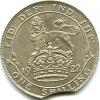
Not bad at all and around the EF mark. The obverse looks as if it has been cleaned lightly with the hairlines visible, the black spot I assume to be dirt and it's a shame about the rim mark at two o'clock. The brightness of the image doesn't help. The reverse looks better. I don't have a Spink 2006, but the values in 2005 were £150-VF, £550-EF and £1500-UNC. A dealer would probably buy at book less 30-40% although this discount could be reduced for rarer items such as this.
-
Yes it is rare. Condition is paramount. Post a picture, and it will be possible to give an idea of grade and so a ballpark price. If it is UNC I'll have it.
-
Are you sure someone hasn't hijacked your account? Are you sure the notice of your blocking comes from ebay? I get 2 or 3 spoofs a day asking to confirm details or telling me my account is suspended or about to be. Your feedback doesn't say that you are no longer a member which I think it would do if they had suspended you. Try clearing cookies, temporary internet folders and history and run a virus check and something like Spybot if you can. If you can't find anything unusual, try again.
-
Romans are a good area for collecting if you want quality ancients. They are abundant and consequentially cheap. There is a good chance that they haven't been cleaned as many finds are made in pots or jars and are frequently as struck or nearly so. Incuding original colours if the pot was sealed thus preventing water seeping in. If you can buy a coin in mint state or thereabouts that is nearly 2000 years old and which often costs less than £50, you can't really ask for much more.
-
Importing coin into the UK
Rob replied to Gary D's topic in British Coin Related Discussions & Enquiries
No, duty and vat are theoretically payable on all imports, but it's a bit random as to whether they charge or not. To give a rough idea of the costs involved, the last one set me back £26-27 for a $700 coin. It would be wise to factor in import costs on the assumption that they will be levied. -
What's the topic for the talk?
-
Importing coin into the UK
Rob replied to Gary D's topic in British Coin Related Discussions & Enquiries
If it comes through the post, it will enter the UK via the Mount Pleasant sorting office where they will assess the duty and VAT payable based on the value stated on the customs declaration (the little white or green label). This will then be payable when the parcel is delivered. They will take cheques. If it comes via courier such as FEDEX or DHL, they will also demand payment on delivery and may require the cheque to clear unless you have an account with them. All parcels travelling to an international destination must have a customs declaration and so in theory all imports should pay duty, but this is frequently waived for low value items. -
Sorry, that was me.
-
People in the US must be cutting back a bit. We still use a pinch of salt here in the UK.
-
The deeply engraved type has the I of GEORGIVS pointing to a space, the shallow portrait has the I pointing to a bead. cf.Davies p.84. He also lists a third variety with a smaller reverse design having quote "slightly longer beads at top with 0 in date 'hand struck' & centred over space". The latter in combination with the first type of obverse.
-
Identifying and then acquiring high grade unrecorded varieties. Finding coins with a good provenance that has been missed by the seller or lastly picking up a piece for £5 that is worth £500. All produce the same buzz.
-
Mark Rasmussen...
Rob replied to Half Penny Jon's topic in British Coin Related Discussions & Enquiries
I haven't seen the advert. Which 1933 is it? -
Is this illiteracy, a genuine misprunt or a chav fashion statement? Sorry, I'm not very clued up on this culture.
-
Looks polished to me.
-
What's hot and what's not?
Rob replied to Chris Perkins's topic in British Coin Related Discussions & Enquiries
If it sells at the reserve or even at the current price, I'm not sure I want to be around the owner tries to resell. There could be a few expletives. The basic problem is the inability of both buyer and seller to grade. -
The verdigris will be from small inclusions of copper in the silver. Don't forget that the silver used was never pure and always had another metal (frequently copper) added to give the appropriate purity. .925 silver has 7.5% impurity This may or may not be evenly dispersed within the silver depending on whether the adduct was fully melted prior to being poured from the crucible. Copper is the usual material used as it is a natural impurity in silver and vice-versa. In fact, if you plate copper, silver or gold with any of the other two elements, over time you will get migration of one material into the other at the interface between the two metals due to their chemical compatibility. It is therefore quite common to see spots within silver coins which are either green or black depending on the oxidation state of the copper. i.e.Nothing to worry about unless the whole flan appears to be copper underneath the silver. If you are not happy, ask for a refund but personally I would be happy with it if there are only one or two spots.
-
I presume you mean 1797 penny and two pence? If so, there are that many about that it would not be worth making them. Peck notes that there were at least two contracts each of 480 tons of pennies and 20 tons of two pences with possibly more. There are well documented modern copies, but for genuine pieces the number available to collectors is such that there is no real shortage other than in the absolute top grade with full lustre. Even these are only going to sell for about a maximum of £1000-1800, - probably too low a value to interest forgers. In low grade the penny is seriously common, the two pence less so given the above ratio of 48:1 based on weight. If you actually meant 1897 pennies, there are huge numbers available in all grades. There is no copper or bronze two pence dated 1897. Unless they are obviously reproductions, they will be genuine. Their value will depend on their grade and ebay is the last place on earth to look for an accurate correlation between grade and market value. The rubbish is usually overpriced and the good stuff - nobody believes it so bids tend to be low. Post a couple of pictures and it should be possible to give a grade and approximate value.
-
If you bought it from a UK based supplier acting as agent for a US firm your contract is with the UK supplier and not the US one. They are the people who you would have a claim against. If they are a business, it may and certainly should be possible to get to them through trading standards. I don't know how you would get to an individual other than to file in the small claims court.
-
For what it's worth, 1 of the 7 1831s in Spinks Adams auction 23/7/03 had this as did the 1834. The 1837 did not.
-
Make the most of its good looks now, because Whitman folders aren't made of acid free paper, so being a nice tight fit gives perfect edge corrosion in time, particularly if it is a copper or bronze piece. Whitmans should be banned like slabs. I don't have a slab insert to hand, but think it is probably silicone sealant (bath sealant). If that is the case, the smelly vapour present is usually acetic acid. Not so good if the insert is freshly made prior to slabbing, but if left to cure long enough in a heated environment it should outgas sufficiently to eliminate the acetic acid.
-
Saw a real wild snake.
Rob replied to Chris Perkins's topic in Nothing whatsoever to do with coins area!
I've only ever seen one and that was 40 years ago. As a 6 or 7 year old, I remember asking my father why it was called that. It didn't seem to be any slower than other worms, just a lot bigger.