
Gary D
-
Posts
1,655 -
Joined
-
Last visited
-
Days Won
8
Content Type
Profiles
Forums
Events
Downloads
Store
Gallery
Articles
Everything posted by Gary D
-
Sounds good to me! An alternate theory I've had for some of these "1 working die only" varieties, is that they were made after the main run for domestic use, when a late application came in from one of the colonies, this could explain why some were rarer in UK circulation than may be expected David Although the 3 over 2 doesn't work for me I can see that possibly they got to the end of the run and needed a new die to finish off. They then bodged something up to run the last few thousand.
-
Scarce varieties of common coins
Gary D replied to declanwmagee's topic in British Coin Related Discussions & Enquiries
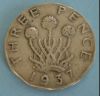
Declan, In my experience, these dates and denominations are so common, that you are unlikely to see their varieties identified and advertised by the average dealer. The more knowledgeable may do so, but for most there is probably little incentive to go through their stocks to see if a rare variety is lurking. As far as eBay goes, again I doubt that many sellers are aware of the varieties, so there is always the possibility that one will pop up - having said this, it seems likely if they do that forum members will pick them up quickly. So from my point of view, the best options are either rooting about in boot/antique fair pots of run of the mill coins, or boxes of similar material in general auctions. If you are lucky this will reward you with specimens albeit probably not in top condition. No you're quite right. In fact, looking for the varieties has brought the treasure hunt back to the hobby. I found a D.2331 1962 2/6 the other day unidentified from a well-known dealer. My question really was not "has anyone ever seen these advertised?", but "has anyone ever seen these?". I've only been seriously looking for a few months, but I must have checked hundreds of 1964/1965 sixpences, and 1937 silver threepences! I've been looking for the 3d for several years now and have never seen one. The 1956 1/2d pop up, I've had spares but very little interest on ebay for them. The 1964 6d is not that scarce. The 1965 I had to buy Davies example to get one, never seen one anywhere else. Gary -
Oddities and Curiosities
Gary D replied to SionGilbey's topic in British Coin Related Discussions & Enquiries
Now that's something I'd like in my collection, I do like the brass 3d. Obviously not two observes put together as the writing on the back is writen backwards. -
Oddities and Curiosities
Gary D replied to SionGilbey's topic in British Coin Related Discussions & Enquiries
Ok, my first item is a 1967 penny that 'clacks' when you drop it. I COULD put a picture up but it looks just like any old boring 1967 penny! Nice grade, mind you, EF with traces of lustre, must be worth all of ... ooh, what shall we say, 99p plus postage? Could it be on a similar penny planchet but for another country? Is it a forgery made of another metal? (As if anyone would forge a 1967 penny ) Does it have anything wrong with the edge? It looks and feels exactly like any 1967 penny (definitely the right planchet, metal, etc). And you're quite right - who'd forge one of they? You'd only notice something wrong if you dropped it on a surface - instead of ringing, it clacks. The only I've not done is weigh it, but I don't have a set of they sensitive coin weigh thingies. Will look like this I think he'd have noticed that! I can definitely confirm I would have noticed that! It was a normal looking 1967 penny when I first got it, apart from a faint crack along the edge.
-
Oddities and Curiosities
Gary D replied to SionGilbey's topic in British Coin Related Discussions & Enquiries
Ok, my first item is a 1967 penny that 'clacks' when you drop it. I COULD put a picture up but it looks just like any old boring 1967 penny! Nice grade, mind you, EF with traces of lustre, must be worth all of ... ooh, what shall we say, 99p plus postage? Could it be on a similar penny planchet but for another country? Is it a forgery made of another metal? (As if anyone would forge a 1967 penny ) Does it have anything wrong with the edge? It looks and feels exactly like any 1967 penny (definitely the right planchet, metal, etc). And you're quite right - who'd forge one of they? You'd only notice something wrong if you dropped it on a surface - instead of ringing, it clacks. The only I've not done is weigh it, but I don't have a set of they sensitive coin weigh thingies. Will look like this -
As far as I can judge, you are quite correct. That sad and sorry specimen is indeed the Gouby X or hollow neck type. In that condition for wear, worth £30 -£40 based on recent sales. As it is, well £0.99 looks about right if you can live with it. looked at that one myself and came to the same conclusion, Gouby X Who's going to be brave enought to ask him a question..... like do you know you have just ruined a rare coin that would have been worth £30-40. Still recon my shilling is the best though

-
Melting down coins for profit
Gary D replied to SionGilbey's topic in British Coin Related Discussions & Enquiries
Indeed, if some dam' fool sent them off direct to be melted without checking first. Mind you, the more that go to the melter the rarer the one's we've got become. -
This is an all-time classic!
Gary D replied to Red Riley's topic in Nothing whatsoever to do with coins area!
I'm glad I wasn't eating my tea whilst reading that, it would've been all up the wall by now. Great stuff. -
1922 Penny with rev of 1927
Gary D replied to Accumulator's topic in British Coin Related Discussions & Enquiries
Yes I'd be very disapointed to miss a 1922 on ebay. One of the easiest things to spot is the 22 aligns with big teeth whereas the common 22 is to gap with small teeth. -
Tenner, I wouldn't want to think I robbed you. Looking at the picture there's several die cracks as well. I think this die had pretty much reached the end of its life.
-
A few days ago I noticed that my 1918KH was getting a bit green inbetween the teeth below the date so I've given it a bit of olive oil soak. I was just giving it a clean-up and notice the bird foot for the first time. I can decide if it's good or spoils it.

-
And the 1923 obv 2

-
Gary, Looking at your photos of the five florins, whatever the outcome of the 'pointings' debate, there is no doubt in my mind that the 1923 with obverse 2 has a smaller head than the one with obverse 3. Assuming that both coins on the bottom row of your photo are the same size as they appear to be, then the head on the right is definitely smaller than that on the left - this is the other differentiator that Davies uses. When I compared your mule on the website with a 1920 obverse 2 florin and a 1923 'normal' florin with obverse 3, I again found that the one on your website is the same size as a normal obverse 2 type. My conclusion, based on what I see is that there are two types as defined by Davies. However, there may be another type and it would be useful to try and establish this from all three differentiators for these types. Here is the 1920, middle of top three.


-
I make it obv 3 davies 1752
-
Here are the three 1920 Florins and both 1923 Florins
-
I Then we ARE talking about an obverse that Davies doesn't know about. If you look at my picture above (Obv 2 left, 1914, and Obv 3 right, 1921) the I in GEORGIVS points to a bead on both. I was quoting Davies Then either Davies is mistaken or I have found a new variety. I've just checked my 1914 under a glass, and both the I of BRITT and GEORGIVS point to a bead. Unmistakeably. The photo on your site - pointing apart - is the shallow portrait (i.e. mostly like Obv 3). The I of GEORGIVS on your coin is to the right of a bead. On my 1926 it's to the left of a bead. And on my 1921 it appears to be directly to a bead. I think this whole topic needs to be revisited. The problem with photos is that the pointing can be very deceptive, and I think Davies is sometime a little off. It's a bit like the discussion about the 1911 penny where there is the shallow neck with I to tooth (Gouby X) and the normal round/flat neck with I to space. The round/flat neck can look quiet shallow on some examples. With the coin in hand the pointing definitly matches Davies description. You're absolutely right about pointings - last night I was checking under artificial light - this morning, in clear daylight with good visibility, the position is different : 1914 (Obv 2) : I of BRITT to a bead, I of GEORGIVS to a space (more or less) 1921 (Obv 3) : I of BRITT to the left of a bead, I of GEORGIVS to a bead (almost dead on) 1926 (Obv ?) : I of BRITT to the left of a bead, I of GEORGIVS to the left of a bead All three coins are minimum AUNC Ok, here's the problem(s) 1. Davies doesn't mention the I of BRITT, he only talks about the I of GEORGIVS. And he only talks about two obverses post-1911 (2 and 3). Yet from the pointings there seem to be at least three, but possibly four (see below). 2. I've not seen or studied a 1923 'mule' before, and despite googling, the only example I can look at is the picture on your website, which shows a clear example of a shallow portrait florin (pointings apart, everything else about it indicates this). Now, that means there are various conclusions we can draw. Conclusion A. Davies is right, there is a rare 1923 mule with the pre-1920 obverse (2). Yours isn't it. The pointings are correct for it, but the design is the shallow portrait. Which would make your coin a new variety, unrecorded by Davies. Conclusion B. Davies is partly right, partly wrong. Right, in that there is a 1923 rare variety with similar pointings to the pre-1920 obverse. Wrong, in that it's not a mule as it features the shallow portrait, and should be considered a new obverse. Yours would be that. I did flick back and forward from your florins page (1914) and your 1923 mule page, studying the pictures. It's no substitute for handling the actual coin, but everything about the picture tells me it's the shallow post-1920 design. I listed the relevant features in a post above. I need to look at this more closely when I get home tonight. The I of BRITT I got from Michael Gouby's site. 1920 & 1923 2 Obverse dies Obv. 2 I of BRITT to bead (Very rare in 1923) Obv. 3 I of BRITT to gap (Flat head *) [1921 -26] * With only SLIGHT wear the head looks only 'F
-
Then we ARE talking about an obverse that Davies doesn't know about. If you look at my picture above (Obv 2 left, 1914, and Obv 3 right, 1921) the I in GEORGIVS points to a bead on both. I was quoting Davies Then either Davies is mistaken or I have found a new variety. I've just checked my 1914 under a glass, and both the I of BRITT and GEORGIVS point to a bead. Unmistakeably. The photo on your site - pointing apart - is the shallow portrait (i.e. mostly like Obv 3). The I of GEORGIVS on your coin is to the right of a bead. On my 1926 it's to the left of a bead. And on my 1921 it appears to be directly to a bead. I think this whole topic needs to be revisited. The problem with photos is that the pointing can be very deceptive, and I think Davies is sometime a little off. It's a bit like the discussion about the 1911 penny where there is the shallow neck with I to tooth (Gouby X) and the normal round/flat neck with I to space. The round/flat neck can look quiet shallow on some examples. With the coin in hand the pointing definitly matches Davies description.
-
The time limit came and went, but nobody bit lol !!! Wonder why not? A VIP Churchill crown is worth £10k without the Satin Finish... imagine what that was worth ....and it was from "a pet and smoke free home", apparently.... Someone else must have seen the auction another one
-
Then we ARE talking about an obverse that Davies doesn't know about. If you look at my picture above (Obv 2 left, 1914, and Obv 3 right, 1921) the I in GEORGIVS points to a bead on both. I was quoting Davies
-
A further pointer is the pointing of the I in GEORGIVS. Obv.2 I to space full neck, and Obv.3 I to bead large low relief head.
-
Davies list both types, 1751 & 1752 You're right - I'm not yet used to Davies - his placing Obverse 3 BEFORE 2 in the listing is a bit counter-intuitive! Be that as it may - the obverse shown on CoinsGB seems to be the shallow design, therefore Obverse 3, therefore not the rare mule. I think you will find it is the rare mule. Just noticed that it's my coin.
-
1905 Halfcrown In hand pix
Gary D replied to azda's topic in British Coin Related Discussions & Enquiries
I completely agree Peckris. The 'something not right' feeling for me, anyway, is the almost complete lack of marking or texture in the fields, compared to the obvious wear in the design. Presumably, in creating a die from an original coin the design wear would be replicated in a lack of die detail whereas tiny bag or handling marks in the fields would be flattened out. Nevertheless, it's much easier to spot these things with hindsight! I beleive they were artificiely worn by rubbing across a piece of leather. I tend to wear the high areas leaving the low areas pristene. -
Davies list both types, 1751 & 1752
-
Yes, it was becoming a bit of a lynch mob. I don't see it being a lynch mob Sion, as i keep saying, if you had purchased a coin from said ebay seller and paid way over the odds i think attitudes would have changed. So i'll say no more on the forum about it The forum had been notified and eBay had been notified so there was not much more we could have done. Back on topic- http://cgi.ebay.co.uk/VIP-Satin-Finish-Commemorative-Churchill-Coin-1965-/290545090274?pt=UK_Coins_BritishComm_RL&hash=item43a5d63ee2#ht_500wt_1156 Almost worth it! Had to check out their other items just in case they had the complete set of VIPs. Nice pair of fingerless groves there.
-
1905 Halfcrown In hand pix
Gary D replied to azda's topic in British Coin Related Discussions & Enquiries
The signature and the colon after GRA are different, your signature seems to be nearly on the neck whereas mine is lower I think the difference between the A of GRA and the colon dot is that your coin has lost the tip of the serif making the gap appear wider. What we need is someone in the know to come along and point out the differences. I do hope your coin turns out to be genuine all the same.


