Peckris
-
Posts
9,800 -
Joined
-
Last visited
-
Days Won
53
Content Type
Profiles
Forums
Events
Downloads
Store
Gallery
Articles
Everything posted by Peckris
-
Depends what's caused it. If it's oil / petrol it should be fairly easy, but if it's lacquer, not so sure.
-
Fake in an NGC Slab!
Peckris replied to Coinery's topic in British Coin Related Discussions & Enquiries
Reserve judgement... If you look closely at that, it appears there may be some gunk trapped between the top acorn and the slab? It doesn't display typical wear, especially when you see the other acorns are ok. There's an 'edge' to that mark, and you can just make out the bobbles under it. Have another look Declan, you may find it's not worn as you think it is? -
Cheers, Dave, I'll had a dig around in there and see how Chris has played it! This is the difference between a catalogue, a reference, and a price guide. Spink and Coincraft are catalogues, in that they identify each major type of a nation's coinage between certain dates, giving unique identifiers to each type that can be quoted as definitive. Both those mentioned are combined with price guides too, as values are given not only for major types (as Seaby started out to do) but for each year, and latterly for each major variety too. They sometimes began as genuine sale catalogues, e.g. Spink's 1925 forerunner of ESC offered each listed item for sale at the prices quoted. A reference covers one particular aspect of a coinage - e.g. Peck for British Museum base metal post-Tudor, Freeman for bronze, and ESC for milled silver. Again there are unique identifiers for each type, and they further subdivide into year, and include proofs and patterns to boot. You will find that references like this don't usually quote prices, though Freeman 2nd edition does in supplement form (which he quickly realised was a mistake, as a reference should last for years while prices are out of date as soon as they are published; Davies quotes prices, but these are now only of use as a guide to comparative rarity). A price guide is not a major reference, but will - like CCGB - quote existing references from Peck, Freeman, etc. Coins and Market Values, the Yearbook, are also simply guides. CCGB is actually one of the best for being comprehensive, but doesn't go back as far as early milled or earlier.
-
Can you show a picture?
-
Searching in vain - milled silver elephant
Peckris replied to Paulus's topic in British Coin Related Discussions & Enquiries
It looks severely cleaned, though. -
That's true. However, the advantage of a made-to-measure solution is that you start with all the fields you identify as what you need, and can add to it as you go along without difficulty. The initial effort will repay dividends in the long run.
-
Welcome to the forums Cristatus I've given a reply to your coin collecting software question, in the software forum (the right place for it). Your collection sounds impressive! I'm trying to collect by type now, but with so many gaps in early milled (pre-1816) and prices being what they are now, most of them will remain gaps. I'm also really interested in the Soho output, but cannot run to patterns and proofs, which is a real shame. I don't even have a decent 1806 halfpenny! but I wouldn't settle for the average kind you see around. I did buy a fantasy proof penny dated 1798, but it was based on real original designs (e.g. Kuchler's portrait) and was only £10 on eBay. I assume you have all the varieties of farthing like "both Gs over" bun, all the 1953s, both 1915s, etc? Colin Cooke was a great source information in his lifetime, especially for farthings. Anyway, will be good to see your contributions.
-
Well well - and £99 with 5 days to go. Who says you have to have lustre for a penny to be saleable? I paid £33 Not bad! Though not quite as good as the £1 my 1862 cost me in the 1990s :D
-
Your link doesn't work. However, members here seem to prefer a spreadsheet solution, with Excel being the leading candidate. For those of us brought up on databases, Access or FileMaker Pro are more flexible than a spreadsheet, especially when it comes to designing layouts or linking files together in a relational way. Here's a link from Google that seems to work ok : http://exactchange.info/
-
Searching in vain - milled silver elephant
Peckris replied to Paulus's topic in British Coin Related Discussions & Enquiries
POOR??? That's a CC 'Fine', and at least 'Fair' to everyone else! -
Well well - and £99 with 5 days to go. Who says you have to have lustre for a penny to be saleable?
-
Well, the detail is crisp enough for a proof, but the rim is often the clincher, and it's hard to tell with yours. I have an 1862 that is similar - great detail, and the reverse is prooflike in certain lights, slight mirroring. The overall colour is dark, like yours. For me, the jury's out, but the likeliest verdict is that either they are early strikes, or struck from proof dies which often got used up for currency strikes. The dark colour? That's the weird part - without the great detail, you'd say that is what often happens to bronze over time. With the crispness... I really don't know. What I do know is, proofs are very rare, so the odds are against it. If I have neck-ache tomorrow, I'll know who to blame Pies! Doesn't your imaging software have a 'rotate' function? Certainly looks like an early strike from the level of detail and crispness of the reverse. It's harder to judge the obverse as the leaves aren't too clear in the photograph. As Peck says, proofs are rare and, in this condition, it would be hard to find anyone who would support a 'proof' verdict. For comparison I have taken close-ups of my two coins. Although the coin on the right is UNC with full lustre, it lacks the smoothness and true consistent depth of detail that the proof (on the left) displays. The overall effect is almost 'plastic' in its smoothness, compared to the rougher and slightly broken surface of the currency strike. Hope this helps. Yes, that really helps. Somehow though, I think the difference lies not in the detail but in the finish, which is why I guess most of the bun proofs are bronzed or similar.
-
Mmm worth £1600 so I'll sell it for a grand. Bargain. 99p would be closer to the mark for a 6 + G in this condition. I note he has tilted the camera so that the clincher between Obverses 2 and 6 - the gap between the top of the head and the linear circle - can't be seen clearly! Yes, funny that! Luckily he hasn't managed to hide different protrusion of leaves at the front of the wreath. Haha yes! A person of limited intelligence perhaps .. or else relying on the limited intelligence of buyers
-
Mmm worth £1600 so I'll sell it for a grand. Bargain. 99p would be closer to the mark for a 6 + G in this condition. I note he has tilted the camera so that the clincher between Obverses 2 and 6 - the gap between the top of the head and the linear circle - can't be seen clearly!
-
Well, the detail is crisp enough for a proof, but the rim is often the clincher, and it's hard to tell with yours. I have an 1862 that is similar - great detail, and the reverse is prooflike in certain lights, slight mirroring. The overall colour is dark, like yours. For me, the jury's out, but the likeliest verdict is that either they are early strikes, or struck from proof dies which often got used up for currency strikes. The dark colour? That's the weird part - without the great detail, you'd say that is what often happens to bronze over time. With the crispness... I really don't know. What I do know is, proofs are very rare, so the odds are against it.
-

-
I'd say CC use "Fine" to cover everything from AF down to AFair. Shame really, as they sell some good stuff otherwise.
-
Yes, I'd agree with that, scott
-
Healthy indeed considering spink has them at about 3,5k in EF. Yet another rarity they don't rate. A mintage of over 600,000 coins, makes you wonder why a 1934 wreath is priced so low in comparisson Yeah, but that's only coins actually STRUCK in 1850. Most of those will have been dated 1849, very few 1850, which is why it's so rare. Until our current Liz, Royal Mint records are only for numbers struck during a calendar year, whether they carried that year's date or a previous year's date.
-
Dave's being too hard on himself, Matty. Mind you, that's not him in his avatar... Welcome to the forums
-
I take an average of 4: CCGB 2011 (about right) Coin Yearbook 2012 (too low) British Coins Market Values 2012 (way too low) Spink 2012 (way too high) I then use a sliding scale based on grade to determine what I'd pay: F 20% of book average VF 42% of book average EF 67% of book average UNC 92% of book average ...and every intermediate grade in between, of course. This biases my successful bidding towards the top grades, which has to be a good thing. Lower grades I only tend to win if they are dirt cheap, which again, is what you'd want to happen! sorry, but you did ask! Apart from the assessment of the Coin Yearbook (which is a mixed bag, I find - some prices too high, some about right, some too low), I'd agree with Declan's assessment. I'm not sure I'd go so low as 20% of a Fine coin if I really wanted it though! Or 42% of a desired VF. There are coins that are rare but usually found in low grade, and rarely or never featured in guides - 1911 'Gouby X' penny, 1903 'Open 3', 1915 'BRITT' farthing, etc - what do you pay for them? What you can afford, if you really want it. And that's the key, I think : we are generally willing to pay a higher price for items we really want, and that's not a bad guiding principle. Rob's advice is very sound. One of the best ways to do research is to attend your nearest auction - they are attended by a mix of dealers and collectors, and with one or two exceptions (where a couple of collectors fight over a particular item) give a realistic idea of what to expect to pay. Bottom line? If you use Spink as your reference, you WILL pay too much. (Been there, done that, got the T shirt..)
-
Phone app for coin questions
Peckris replied to Henrik B's topic in British Coin Related Discussions & Enquiries
Henrik - you may need to know that "pocture" is Germano-Scottish for "picture" -
He's changed. Or else I didn't view a high enough sample of his coins turds.
-
Its maybe a sign of the times that good coins are harder to come by.........I'm not a huge fan of CC as i bought about 4 and sent 1 back from the 4........They were obviously at one time a bigger dealer than they are now. Poor grading will always come back to haunt anyone, good grading will only enhance a reputation and repeat business Couldn't agree more Dave, my favourite dealers for accurate grading are our very own Rob and Michael Gouby, I have had issues with many well known others! Problem being Paul, that good coins will cost top end and perhaps where copper123 is not prepared to go, you have to decide eventually. Mr Gouby has an 1875H penny which i have an issue with his grading on, I had a much better one but he's grading his as EF, in my mind it's no chance in hell as being EF. His price 750 quid, i sold mine to a forum member for 400 Just looked at Michael's 1875H. It's about the same as mine which I wouldn't rate better than VF. I'm looking for an upgrade if I can find one. For comparison, here's mine: Interesting. That is what Michael illustrates as VF in the original edition of his "Bronze Penny" book.
-
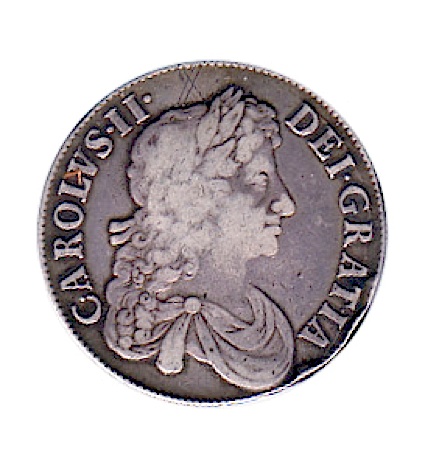
Its maybe a sign of the times that good coins are harder to come by.........I'm not a huge fan of CC as i bought about 4 and sent 1 back from the 4........They were obviously at one time a bigger dealer than they are now. Poor grading will always come back to haunt anyone, good grading will only enhance a reputation and repeat business Couldn't agree more Dave, my favourite dealers for accurate grading are our very own Rob and Michael Gouby, I have had issues with many well known others! Problem being Paul, that good coins will cost top end and perhaps where copper123 is not prepared to go, you have to decide eventually. Mr Gouby has an 1875H penny which i have an issue with his grading on, I had a much better one but he's grading his as EF, in my mind it's no chance in hell as being EF. His price 750 quid, i sold mine to a forum member for 400 I have been pleased so far with my first few purchases from Michael, most of which I saw 'in the flesh' at his shop ... I think you are a strict grader which is a good thing, but I have yet to buy from you! Here is my first purchase from Michael which perhaps colours my judgement!: Described as nVF and £210, which I thought was an extremely good buy ... other members' opinions may differ! I did visit him recently and he was upping his prices, stating that he could no longer buy the same coins in the same grades for what he was selling them for. And I have yet to/may not ever get into copper/bronze, which is undoubtedly a different area of expertise! Only going by personal experience of course, have been happy with John Newman lately (as I read so have others), while I feel Colin Cooke, Bucks Coins and INGRAM offerings are consistently over-graded and/or overpriced ... also noting that more and more 'bricks and mortar' / traditional dealers are listing on the Bay! Hmm. In that case I shall have to re-grade my Charles II crown, as I've always had it as GF. The reverse is about the same as yours, but I'd say the obverse was a bit better (though later obverse of course).