
Coinery
-
Posts
8,269 -
Joined
-
Last visited
-
Days Won
162






Coinery's Achievements






-
I also noticed a spelling mistake in the seller description…‘certified’ has been spelled incorrectly. I’m pretty certain that either the buyer or seller would need to be certified?
-
Henry II Tealby Penny: Attribution help requested
Coinery replied to Overlord's topic in British Hammered
Good point! -
Henry II Tealby Penny: Attribution help requested
Coinery replied to Overlord's topic in British Hammered
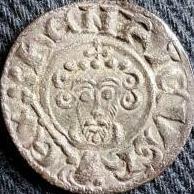
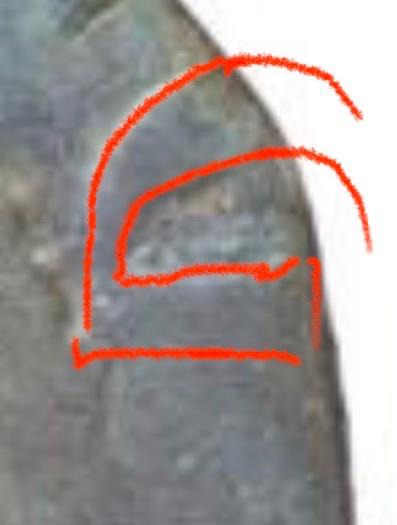
With Rob’s proposition for a shorter name, I wonder whether it might be RAVL? There’s certainly a hint of the V My only other thought is, if the city was CANT, with the O being a G instead (the 2nd curve of the ‘O’ looks straighter, so a possibility I guess?), then GOLDHAVOC could also work? A die-match will be the only sure way of answering the question.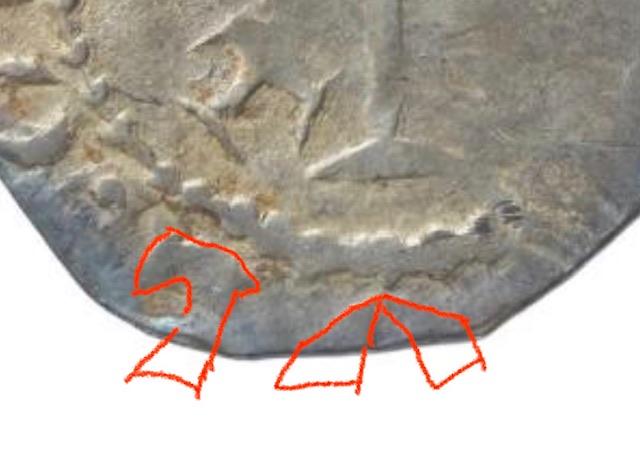
-
I love these…great designs!
-
Bit of a tragic tale, that!
-
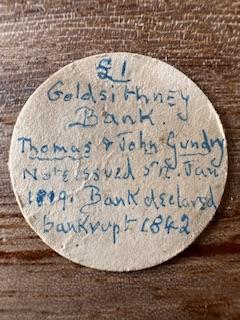
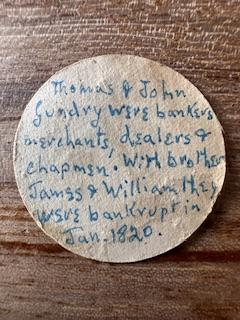
Without the ticket I wonder if it may even be in unknowing hands? It would only take one local deceased-estate sale for it to lose its identity and fall into ignorant hands.
-
I found this £1 note ticket in with a coin lot I recently bought. Absolutely nothing to do with my items, and always sad, especially when someone has gone to such troubles to document an item in this way!
-
Edward Cont. Sterlings…Does anyone have knowledge of these?
Coinery replied to Coinery's topic in British Hammered
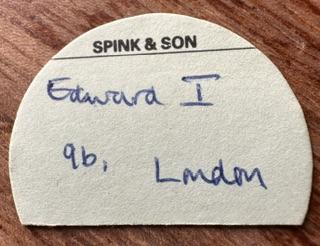
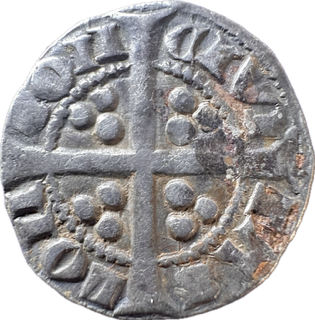
-
Edward Cont. Sterlings…Does anyone have knowledge of these?
Coinery replied to Coinery's topic in British Hammered
So, I can confirm that all the S’s are serpentine and belonging to 9b with no star on breast. There is no perforation of the flan, and the rust on the reverse was not part of the coin, and has for the most part flicked off. North did not identify any ANL errors for Class 9, though Wither’s, as Coys pointed out, has recorded a London 9a piece, but also a 9b1 (which this coin is) for York (but not London). Therefore, to the best of my knowledge, this is an unrecorded obverse for London. Interestingly it arrived with a Spink ticket with 9b on it, but no mention of the legend error! Only a phone image for now!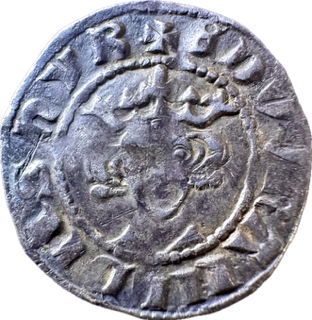
-
No, sadly not! Just plain old Coinery, me!
-
I 100% understand your point, though I have to say the fine ‘lines’ on the right-hand example look very different, and very suspect to me. Commendable that you’re embracing numismatics at this level, especially for someone of your age. Excellent stuff 🙏
-
If the coin to the right is the shiny version you speak of, you can’t rule out polishing or cleaning of some description? Your photos highlights hairlines running in multiple directions, seems odd for a museum coin, which was presumably taken into its collection straight from the press?
-
I was just taking a look at this man’s Public Works on the drop-down on Wikipedia…this man was prolific, what a sculptor he was! https://en.wikipedia.org/wiki/Joseph_Edgar_Boehm
-
Stunning! I LOVE that! 🙌
-
Well, if you can find it on Amazon, I would highly recommend it! It’s looked at impartially, investigating both its positives AND downsides, with some unexpected discoveries/findings!