
Coinery
-
Posts
8,269 -
Joined
-
Last visited
-
Days Won
162
Content Type
Profiles
Forums
Events
Downloads
Store
Gallery
Articles
Everything posted by Coinery
-
? Repaired Crown Edward Penny
Coinery replied to Coinery's topic in British Coin Related Discussions & Enquiries
Looks like one for TomGoodHeart. And there was me thinking I was about to break TWO predecimal records in one hit...the 0 reply post, and the longest conversation ever held with oneself in the Mary Fake! You've blown it now, peterkin -
Is this a FAKE Mary Groat?
Coinery replied to Coinery's topic in British Coin Related Discussions & Enquiries
Just an update! The 'die-match' coin has arrived, it tests positive for high-grade silver, so it'll not be an easy matter of just condeming an entire die type. However, ahead of my little die-study of the Mary pomegranate groats, there is evidence enough to suggest caution when buying a coin of this die match. -
Is this a FAKE Mary Groat?
Coinery replied to Coinery's topic in British Coin Related Discussions & Enquiries
Has anyone seen, can link me to, or know anything about, the modern 'POSUI reverse' fakes mentioned in North? Obviously a very different animal to what we are currently looking at here, but would be good to get one up here anyway! -
Happy birthday, John!
Coinery replied to HistoricCoinage's topic in Nothing whatsoever to do with coins area!
Many happy returns, John! -
? Repaired Crown Edward Penny
Coinery posted a topic in British Coin Related Discussions & Enquiries
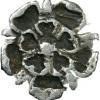
Can anyone help me in my understanding of this penny? I feel loathed to ID it without understanding the crown. Is it a broken crown punch? Repaired crown on die? Or...? It looks to me as if there is some symetry and intention re the two outer fleurs, so I'm leaning towards a die-repaired-crown, type 10 (maybe)? It's giving me a headache, that's for sure. I'm at a bit of a loss to be honest! -
Is this a FAKE Mary Groat?
Coinery replied to Coinery's topic in British Coin Related Discussions & Enquiries
When you say 'blundered,' do you mean stolen? Was this really a common thing, given that the dies would still be capable of producing 'legal' tender right up to the recoinage in W3? I'm also just wondering about the production of dies, using a currency coin. I'm guessing that devices on a newly created fake die would be, if anything, exact or larger? Whereas a stolen set of dies (maybe even a 100 year's old by then) could potentially have corroded (and the rust would've swollen) and create devices that are frailer and smaller in appearance? Any thoughts? And just for the record, the reverse dies are also a perfect match! -
£220 + comm. on the groat. I THOUGHT I'd won 5! Just checked and it's 4! I thought the bid was mine! So, if I repeatedly clicked the bid button at the time of the auction, just to make sure it was mine (which I thought it was), would it up my own bid, or does it just ignore it? The first 2 lots on saturday that I won, never put any of the red writing up to say I was bidding/winning etc, but fortunately I was. Not sure what happened to the 1 in 3 from today?
-
5 but nothing for me, where were the quality C1 farthings and E1 coins? I had a little go at the Mary Groat and some of the E7 pieces, but that just wasn't happening.
-
Postage is listed on the invoice. Brilliant, thanks Nick!
-
Thanks, chaps! Just another question, do they suggest a shipping cost in the invoice, or do you have to ring them for this anyway?
-
Cut Hammered Prices
Coinery replied to Generic Lad's topic in British Coin Related Discussions & Enquiries
I'll just empty the sawdust out of me wellies and I'll be right there! Better make the showdown in Stroud then, cowboy, we can fight it out over their dozen or so coin lots! 50ml of petrol each...may the best man win! I'm only comin' with 18" and rawhide so make it a clean fight! No scratchin' or pullin' hair, Declan, or I'll tell Peck! -
Lockdales will invoice you Stuart and the 3% admin will be included. Theyu are usually pretty sharp. Thanks, John! Is that by post or email? You know why I ask!
-
So, is it a telephone call to lockdales to make payment and arrange postage, or do they email you? Do lockdales take The Saleroom fee, or is that done separately? What do you guys do?
-
Is this a FAKE Mary Groat?
Coinery replied to Coinery's topic in British Coin Related Discussions & Enquiries
Something I especially like about this transparency software, is the rather pleasing effect of combining the strong points of two coins - merged together they produce an eye-appealling coin, if only the bottom coin existed! The bottom overlaid image has, for example, all the beading across the front of the dress, a chain is now present on the necklace, the ear's complete, a top bar now exists on the A in Maria, etc, etc, etc! -
Cut Hammered Prices
Coinery replied to Generic Lad's topic in British Coin Related Discussions & Enquiries
absolutely. An afternoon, a chainsaw and a few vanloads. Woodshed work tomorrow for me... Good on ya Declan! We still carry a NICE chainsaw in the boot of the car (chain hand-sharpened [properly]), ready for the return of the days! Soon to be upon us! Wood burner at both ends of a 70 ft steel tube! -
Is this a FAKE Mary Groat?
Coinery replied to Coinery's topic in British Coin Related Discussions & Enquiries
OK, so the proposed genuine coin above is now mine, solely for the purpose of determining its silver content, and resolving the first of the questions about the original counterfeit's origins, I hope! So, if anyone wants the die-match (following a positive silver test) it's for sale at £88 or greater? -
Cut Hammered Prices
Coinery replied to Generic Lad's topic in British Coin Related Discussions & Enquiries
Before going veggie I worked ferrets, lurchers, shot, trapped, fished, AND also Night Hawked with Harris'! I presume you're talking about a different thing? -
Is this a FAKE Mary Groat?
Coinery replied to Coinery's topic in British Coin Related Discussions & Enquiries
First Die-match for the counterfeit! I noticed one major thing that stands out is the broken lion punch on the reverse shield (It looks like the Spink's 2012 plate coin also has the broken lion punch, but is a different die [that would've been a noteworthy discovery, to say the least ]), which is missing one of its rear legs, so I started looking around for the broken lions and found my first match. The obverse images below are (apologies, I overdid the resize): Top - Counterfeit coin with 15 key markers (I could've done more, but I don't think it would've made the case any stronger). Middle - Recently discovered die-match, with the same 15 markers. Bottom - The two images overlaid with transparency. I've also added the two reverses for comparison. I haven't 'tested' them together, but I'm thinking they will fit together rather nicely. So, believing the die-match coin to be a genuine example - and it certainly looks a million dollars more so than the counterfeit - what's going on? I'm presuming a counterfeit set of dies were produced from an original coin, and superbly convincing pewter/tin copies were produced en mass! ANY THOUGHTS either way, please!!!!!! BEWARE THE LEGLESS LION! I'm going to see how many groat dies I can find out there (anyone for a speculatory guess, given her short reign, and imminent marriage to Philip?), and set it up in the same fashion as the Liz dies, making a special feature of the obverse and reverse die to watch out for! I also forgot to mention that an obvious stand-out obverse detail is seen at the central cross (not the top cross) in the crown, which has the crisp infill between the branches. If anyone knows the name of that particular cross and/or the name for the individual 'triangle-branches' of it, I'd very much appreciate that information too. -
Cut Hammered Prices
Coinery replied to Generic Lad's topic in British Coin Related Discussions & Enquiries
Just to clarify re a catalogue...I was thinking of something spink-like in it's basic recording of type, setting out, perhaps, a rough valuation, one against the other, as they do in the spink book! Maybe not! -
Last time I bought from them, postage for a few small single lots was £7. Many thanks, Nick!
-
Blimey, I'm falling asleep listening to this! Does anyone know whether the postage charges are reasonable, or whether you have to organise your own courier etc?
-
Try this, Stuart. Thanks, Clive, I couldn't find that for love nor money on the ayePhone last night!
-
I'm trying to find room 2 on The Saleroom, does anyone have a link? I can find room 1 on there easy enough, but the hammered from room 2?????
-
Yes, welcome Kurisu! Now about these capsules! I personally have never bought one, preferring the cardboard-edged, clear-windowed, flips, stored in a numis 2x2" album (6 per page)! I use the 2nd page to house purpose-printed 2x2" catalogue card insert for ID. Sorry, but I'm certain someone can help, given your untimely ejection from the forum!
-
Cut Hammered Prices
Coinery replied to Generic Lad's topic in British Coin Related Discussions & Enquiries
An excellent question! I personally have no clue, but will be watching this thread in the hope it's a long one! I have a half ( no pun intended) interest in these myself! I think Peter's right, in that the single, most important, feature, must surely be that the halves and quarters must clearly identify the host coin! I would think this area is begging for a catalogue! Then watch the prices rocket! £££££