
Coinery
-
Posts
8,152 -
Joined
-
Last visited
-
Days Won
155
Content Type
Profiles
Forums
Events
Downloads
Store
Gallery
Articles
Everything posted by Coinery
-
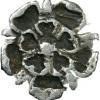 I grabbed this one as I saw a high-point shining through a mediocre photo, and wondered whether there might be something unusual with the date! Does a 5/3 exist? Does the 5 date punch look anything like the 'shape' in the picture, or is this a 3 with nothing more interesting than a surplus 'BLOB' of something?
 -
I bought this recently (BCW Shilling CC-2Ei:C1), not for the grade (obviously), but rather the rarer bust 1Ai ( i=all pearls present in crown, the state of the punch at Christmas 1560 ). In case anyone is interested, the reverse Lis have the classic 'nibble' out of the left petal, making them BCW14 (not one of the major identifiers, as every known currency Cross-Crosslet and Martlet shilling has Lis 14). So two questions: 1)Does anyone know the reason behind an annoyingly common practice of scratching lines into the fields of these old coins, typically two lines crossing. 2)Does anyone know of a source that identifies the rarity of the various varieties within Elizabeth's coins? Is there a better option than the 'how often you see them available for sale'? BCW only attempt a rarity based on their 'virtual collection' and to some extent the mint records and indentures, but these do not look at the individual types within the same denomination privy mark. For example, the Cross-Crosslet is identified as the most common Elizabeth I shilling ever produced (6 million), but it doesn't distinguish between the six different busts and the staggering 52 different die-pairings for the CC shilling alone. I guess a lot of people would not be interested in a Cross-Crosslet shilling beyond its Bust Type, but the RARITY of the six CC Shilling Busts, anyone know?
-
Is this hammered from dies (some of the letters look really sharp), or is this another cast?
-
Is this an NGC Boob?
Coinery replied to Coinery's topic in British Coin Related Discussions & Enquiries
-
Is this an NGC Boob?
Coinery replied to Coinery's topic in British Coin Related Discussions & Enquiries
If you look on the BUST, you'll see there's TWO, left facing! -
Is this an NGC Boob?
Coinery replied to Coinery's topic in British Coin Related Discussions & Enquiries
Typical TPG mistake. These crop up quite frequently and often present an opportunity. Don't complain, exploit the situation. Forget bust type, that is unknown territory for them - as is identifying the coin on a consistent basis. You eliminate a lot of buying competition from those who have no interest in personally identifying what they are buying, merely relying on what they are told. Just beware of the instances when a rarity is claimed in error, as this can work both ways. No bargains here, unfortunately, the seller is asking over $1000 for this one, he'll/she'll be waiting a long time I reckon! I guess if it WAS a unique Elizabeth 4p with rose, disguised as a sixpence... -
Following an email from NGC the other day, explaining 'there were gliches in the system' preventing me from accessing the verification details of a couple of coins, I've been checking other coins to see if the verification remains intact. Anyway, I came across this one, that has been described as a 4p http://www.ngccoin.com/certlookup/CertResults.aspx?CertNumber=3625167-001 now they either meant BUST 4B, in which case it's still an error, or they've got the denomination wrong...not good whichever! So, am I missing something obvious here, or is it a boob?
-
Don't think that is a recognised Olympic event. Ahh, you've obviously never seen us plating up a near-full English in our little box, with the challenge being to keep it all hot! Hurdles and javelin come immediately to mind!
-
The only thing about collecting from change for me, is the absence of history! I can absolutely and fully understand the 'collecting syndrome,' the compilation of hard-won aquisitions of any type but, mystery, romance, and mystic, are where it's at for me! Great story, though, and glad you're enjoying the sport! Do they do vegetarian food?
-
Yep, take it easy, and good luck!
-
1694 Farthing - Unbarred A's in Maria
Coinery replied to Coinery's topic in British Coin Related Discussions & Enquiries
Thanks, Colin, that very much clears the issue up for me! -
1694 Farthing - Unbarred A's in Maria
Coinery replied to Coinery's topic in British Coin Related Discussions & Enquiries
I've got Peck and Freeman on the shelf! It's the Spink pricing, rather than the ID that intrigued me as, presumeably, these prices have come from actual auction sales of type? I'm always up for viewing die and punch information at a deeper level, so will certainly try and dig out the 51 Will PM later, thanks again! Generally speaking the prices will reflect past sales, but if there isn't a major sale for a while you can get a mismatch between history and reality. Some prices have plummeted in Spink following the realisation that things aren't as rare as previously assumed. If there is no major farthing sale in a London auction, then prices are either going to drift upwards in a percentage increase across the board, or not get revised at all. If there were a couple sales realising below Spink book, the price would probably be revised down, assuming they reviewed it at all. People that know a specific field won't bother with prices anyway. Rarities are instantly recognised for what they are and appropriate bids made. Thanks, Rob! I always assumed they collated figures from a broad auction circuit, rather than just from the specialised sales! The triple quoted figures for unbarred A's in Fine did surprise me, especially when, for other types and varieties, and I use Elizabeth as an example, there appear to be no significant price differences, even for quite obvious variations (busts being an easy one)! It seems to make little difference with an Elizabeth Sixpence whether Liz has a ribbon in her hair, a bowler hat instead of a crown, or even smoking a pipe etc., etc! I just find it odd to see the 17/18C farthings so specifically valued! Not everything is revalued every year. The September sales are a good indicator of what is going to be revised as the next year's edition is only a couple months away from release. Last September was the Brady groats, so groats as a whole were revalued. For the last few years the prices had crept up annually by £25 or £50 in VF, however, a sale with such a comprehensive selection of a single denomination enabled a wholesale revision of prices with the ability to vary them relative to each other as it became obvious what was in demand amongst specific groups. When coins sell for below estimate, either there is something wrong, or it is common and not worth chasing. If one coin goes ballistic, either two people refused to give up, but also it is likely to mean that the coin in question was an unusually good example or rare variety. What you also have to bear in mind is that when a number of varieties are grouped under a single heading, the price is for the commonest variety. Hidden within a nominal price of £50 might be a £1K variety, but unless it is widely collected would not necessarily warrant its own reference. I'm really glad I pursued this thread! Reminds me of moments in education, where a particularly patient and/or persistent teacher would present something a slightly alternative way, and suddenly the penny would drop! -
1694 Farthing - Unbarred A's in Maria
Coinery replied to Coinery's topic in British Coin Related Discussions & Enquiries
I've got Peck and Freeman on the shelf! It's the Spink pricing, rather than the ID that intrigued me as, presumeably, these prices have come from actual auction sales of type? I'm always up for viewing die and punch information at a deeper level, so will certainly try and dig out the 51 Will PM later, thanks again! Generally speaking the prices will reflect past sales, but if there isn't a major sale for a while you can get a mismatch between history and reality. Some prices have plummeted in Spink following the realisation that things aren't as rare as previously assumed. If there is no major farthing sale in a London auction, then prices are either going to drift upwards in a percentage increase across the board, or not get revised at all. If there were a couple sales realising below Spink book, the price would probably be revised down, assuming they reviewed it at all. People that know a specific field won't bother with prices anyway. Rarities are instantly recognised for what they are and appropriate bids made. Thanks, Rob! I always assumed they collated figures from a broad auction circuit, rather than just from the specialised sales! The triple quoted figures for unbarred A's in Fine did surprise me, especially when, for other types and varieties, and I use Elizabeth as an example, there appear to be no significant price differences, even for quite obvious variations (busts being an easy one)! It seems to make little difference with an Elizabeth Sixpence whether Liz has a ribbon in her hair, a bowler hat instead of a crown, or even smoking a pipe etc., etc! I just find it odd to see the 17/18C farthings so specifically valued! -
1694 Farthing - Unbarred A's in Maria
Coinery replied to Coinery's topic in British Coin Related Discussions & Enquiries
Colin Goode (Aboutfarthings) has promised a definitive list of 1672-1724 Why wait? Sorted 1672 1673 1674 1675 1676 1677 1678 1679 1680 1681 1682 1683 1684 1685 1686 1687 1688 1689 1690 1691 1692 1693 1694 1695 1696 1697 1698 1699 1700 1701 1702 1703 1704 1705 1706 1707 1708 1709 1710 1711 1712 1713 1714 1715 1716 1717 1718 1719 1720 1721 1722 1723 1724 -
1694 Farthing - Unbarred A's in Maria
Coinery replied to Coinery's topic in British Coin Related Discussions & Enquiries
I've got Peck and Freeman on the shelf! It's the Spink pricing, rather than the ID that intrigued me as, presumeably, these prices have come from actual auction sales of type? I'm always up for viewing die and punch information at a deeper level, so will certainly try and dig out the 51 Will PM later, thanks again! -
1694 Farthing - Unbarred A's in Maria
Coinery replied to Coinery's topic in British Coin Related Discussions & Enquiries
Colin Goode (Aboutfarthings) has promised a definitive list of 1672-1724 Yes, come along Colin, I can't continue poking around in the dark forever! -
1694 Farthing - Unbarred A's in Maria
Coinery replied to Coinery's topic in British Coin Related Discussions & Enquiries
Thanks, Peter! Any ideas where I'd get a list 51? Do similar studies exist for the William III copper? -
You certainly cast a very wide net, Dave! Where on earth do you start with paper money? I basically got it for its history. Its an operation Bernhard forgery and the serial was'nt noted for this date. It has been now. Just missed an original white isse Tenner in an auction from 1935, bugger!!!!! All totally over my head! Though I did once, a long time ago, decide if Ed7 had any notes, I would collect them! I still don't know to this day whether he did or not?
-
George IV 1821 Gold Sovereign NGC FAKE
Coinery replied to Coinery's topic in British Coin Related Discussions & Enquiries
That's really worrying as the number is still coming up invalid for me on both coins! I've emailed them for advice. Doubly annoying as they were both great buys! Had a prompt reply from NGC saying there had been a glitche in the system over the weekend! -
Expert Tooling in Fields!
Coinery replied to Coinery's topic in British Coin Related Discussions & Enquiries
-
Whilst the tooling in this particular instance is intentional and not meant to deceive, I thought some close-up images of the fields on John's Victorian Penny was worth posting here, if only so that benefit could be gained from the realisation that the missing Trident Staff, Shield (where the carver in this instance has created a NEW, amazingly level, field), and Bun, could equally be a missing dot, colon, serif, absolutely anything, actually!
-
Continuing from the beginnings of a discussion about apparent rarity, here is an unbarred A's in Maria 1694 farthing, on the usual poor cast flan, added to which is a more than acceptable level of reverse corrosion. The question is: Spink catalogues this unbarred 'A' coin at nearly 3 times the value of the regular barred 'A' issue in Fine. All these unbarred A 'rarities,' William III copper included, seem to be turning up with regularity on the Bay, are they overpriced, are they as rare as thought?
-
You certainly cast a very wide net, Dave! Where on earth do you start with paper money?
-
Hope your mum is OK and, hey, no response is ever needed, just thought this thread was as good a place as any to chuck a couple of links on for you!
-
A "safe" coin as an investment?
Coinery replied to Mongo's topic in British Coin Related Discussions & Enquiries
Very nice Richard, I'd be happy with this one, though a bit of a side-step from your usual Charlies, however!