
bagerap
-
Posts
1,260 -
Joined
-
Last visited
-
Days Won
46
Content Type
Profiles
Forums
Events
Downloads
Store
Gallery
Articles
Everything posted by bagerap
-
I usually put Numismatica on the CN 22. Handwritten in shaky cursive script. No probs so far.
-
It looks to be a copy of a double sovereign which was issued as a cheap watch fob. St George & Dragon on the reverse. There's probably a flat spot above his head where the suspension ring's been filed off.
-
I have an idea that they are coming out of Russia. There's a seller I've mentioned before who has previously sold some worryingly good fakes, although he's currently flogging Third Reich and Stalin era fakes.
-
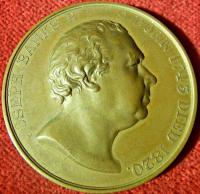
Take a look at the postage: http://www.ebay.co.uk/itm/LARGE-BRONZE-ROYAL-MINT-MEDALLION-SIR-ISAAC-NEWTON-KING-WILLIAM-COAT-OF-ARMS/362071159053?hash=item544d1f710d%3Ag%3A5-YAAOSw9EZZksaQ
-
Conservation/Restoration Person Required
bagerap replied to Rob's topic in Nothing whatsoever to do with coins area!
Looking to be military, but for personal possessions rather than equipment. If it had the original hinges it would be easier to date. -
Conservation/Restoration Person Required
bagerap replied to Rob's topic in Nothing whatsoever to do with coins area!
Interesting piece. Too small for a blanket box but seriously heavyweight timber used. As a suggestion, the top could be rotated so that the damaged section by the hinge becomes the leading edge. From that point it's not too difficult to trim and add a matching fillet of suitable timber, probably with a few biscuit joints. How do those front catches work? Is it just finger pressure? -
Conservation/Restoration Person Required
bagerap replied to Rob's topic in Nothing whatsoever to do with coins area!
What sort of size Rob? Any photos. I'm time served as a cabinet maker but have not worked on the tools for a few decades. -
Post mint damage. Someone's hit it with a punch
-
My mate Gabbie Connelly was the bass player before they made it. He married Jackie and she persuaded him that becoming a milkman had better long term prospects. The Daily Mirror did a centre page spread on him around 20 years ago.
-
I've been away and so missed the dodgy "novelty" victorian pennies. I'm pretty much convinced that they all originate from a Russian seller on ebay. I managed to have him taken down for a few months but he's up again and still listing dangerously good copies.
-
Fully agree with MrBE on WoC for your coin. I have a feeling that it may be a debased Bull & Rider jital, which would probably put it a way before 1600.
-
Can you get that weighed, in grams? It's possibly a coin weight.
-
But come on, he does have 90.7% positive feedback. What more could you ask of a seller?
-
TBH, I hadn't considered Brunk, what's he like outside of North america?
-
Thanks John. The date is within spitting distance but it's a long way from 1d to three shillings. As with all countermarks, you are left with the question, WHY?
-
Gawd bless yer Guv.
-
That is the coat of arms of Castile & Leon, but the coin looks to be a cast copy. Better pics, better ID. (Oh, and please turn off your Caps Lock)
-
A very long shot I know, but does anyone have British Countermarks on Copper and Bronze Coins,James Gavin Scott, Spink & Son Ltd., London 1975 I'm trying to trace a CP counterstrike that I have on the obverse of a 3/- Bank token and have been lucky in the past matching copper and bronze countermarks to silver coin.
-
1919 shilling date oddity
bagerap replied to bagerap's topic in British Coin Related Discussions & Enquiries
Sorry Rob, I somehow missed your reply. Thank you. I've not seen anything like it before and I think it's neat. -
Me too. I'd assumed that it was a pension fund purchase along the lines of British Rail's huge art collection.
-
This is only a tentative ID, any help appreciated although it's a lousy image. 10 mm, 0.6 gr.
-
I do agree that the example shown looks very much more like an example of paleofaeces (human byproduct). The rough and ready way to field test them is that paleofaeces will generally yield to the hammer. Coporolites don't.
-
Bloody marvelous! I spend a few years on here learning at the feet of the Masters. Putting in my own few thoughts on exonumia from time to time. And when it comes to my turn to shine; a chance to display my arcane knowledge; what do I get? Dino-bloody-doodoo. Yes coporolites. In the early 1800s, a local girl to me, Mary Anning, was noted for finding and selling fossils from the cliffs at Lyme Regis. She is, incidentally, thought to be the subject of the tongue twister “She sells sea shells by the sea shore” She noticed that a fossil known at that time as a bezoar stone was often found in the abdominal region of ichthyosaur skeletons found in the Lias formation at Lyme Regis. She also noted that if such stones were broken open they often contained fossilized fish bones and scales as well as sometimes bones from smaller ichthyosaurs. It was these observations by Anning that led the geologist William Buckland to propose in 1829 that the stones were fossilized feces and named them coprolites. Buckland also suspected that the spiral markings on the fossils indicated that ichthyosaurs had spiral ridges in their intestines similar to those of modern sharks. We are, in effect, talking about rifling very much like on a modern bullet. What we are in fact seeing is the mineralised result of a creature excreting in an extremely specific environment. Not too moist, not too dry and probably not unlike very deep leaf mould. The first thing that our dino-turd would do involved slowly losing its internal moisture, a process that required a steady temperature over a considerable period of time. After it had become dried but not quite dessiccated minerals would leach in from the earth and the surrounding leaf mould. Millenia later, you have a very efficient paper weight and a great talking point. The various external bumps, ridges and grooves are a co-effect of dehydration and rifling. You can find out more on Wikipedia, but I wrote much of that also.
-
^ My GP has the same opinion of me.
-
No disrespect intended towards the vendor, but WTF is a "Semi Proof"? http://www.ebay.co.uk/itm/1-OZ-BRITANNIA-958-SILVER-2004-SEMI-PROOF-TWO-POUND-COIN-/382148191177?hash=item58f9cea3c9:g:ZUEAAOSwMvtZWNLs