

jelida
-
Posts
1,899 -
Joined
-
Last visited
-
Days Won
115
Content Type
Profiles
Forums
Events
Downloads
Store
Gallery
Articles
Everything posted by jelida
-
He’ll be bragging on about his EBay bargain for years. He presumably thinks it’s as advertised, why else bid twice! But as you say Pete no great loss. Jerry
-
This is rather a nice way to collect as a series a great variety of rather pretty coins. I suppose you could do something similar with earlier English coins in that a number of continental coins did circulate freely at various times alongside our currency, I have metal detected examples from the low countries, Spain, France and of course Venetian Galley halfpennies, as well as Irish and Scottish. However I don't know of a comprehensive list, or equivalent values unless they circulated purely on the basis of fineness and weight. Jerry
-
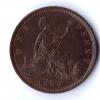 It was a difficult one for me, a better example than mine but not a sufficient advance that I wished to put in a serious bid at this time, especially from this seller. But I think the overall price was not unreasonable, and apart from the recent DNW sale I see no evidence of a reduction in the penny market. Since my move I am also collecting pennies of my local town, which as they are mostly Anglo Saxon or Norman has imposed additional financial pressures and selectivity. Jerry
 -
I love the idea, though pugilism especially regards politics can lead to ongoing animosity. There have to be rules. My best mate and I have the 9 o’clock rule, on our weekly curry nights with our wives. The men (occasionally sons are present) adjourn to the pub at 7.30. By 9, when the women collect us (this may include daughters) the men are well oiled, and a couple of bottles of wine over curry doesn’t help. Things can get very heated, especially regarding politics. The 9 o’clock rule acknowledges that nothing stated or done after that time is actually worth a damn, and need not be apologised for later. Indeed it is a poor show to even refer back to the previous night. But angry debate is one of life’s great pleasures. So what are the rules here? It worries me a bit that once committed to record, an injudicious comment can be revisited and allowed to fester. Do we have any suggestions for a ‘9 o’clock rule’ equivalent? Jerry
-
That is fair comment, point taken. Jerry
-
Which is why I ask what you were getting at by your post. And I have no Idea what to expect by a ‘Grammar aside’ comment, other than I wasn’t sure what you were getting at and the probematic grammar didn’t help. I suspect the comment usually follows grammatically unclear sentances. But you clearly have other interpretations which you wish to impose on me. Jerry
-
Thanks Chris for all your un-lauded behind the scenes work to host, moderate and maintain the most important and serious (generally) of numismatic forums. I am sure we are all very grateful for what you do, I know my existence would be much impoverished were it not for the Predecimal Forum. Jerry
- 3 replies
-
- 10
-

-
Grammar aside, I am really not sure what you are getting at here. If you go back far enough, we are probably almost all the product of African human evolution and migration, with multiple further phases of subtle racial and tribal genetic concentrations within populations and subsequent migrations and conquests. But even the Roman and Anglo Saxon and Norman population movements were no more than a few percentage at the time, and the inevitable incorporation of their genetic markers into the general population over time and reproduction (and we were in those days talking of populations in the single figures of millions) does not somehow confer a European nationality as opposed to the multi generational ‘British’ nationality most of those of us born within the UK feel. So while I certainly accept that most if not all of us have a host of markers reflecting the population movements of humanity , what is your point? The majority of the population of Europe will also carry markers of their African, and subsequent Celtic, British, Scandinavian, Teutonic ,Germanic, Slavic, Arab and a multitude of other heritages. Nationality is not a matter of genetic origin, it is a state of mind. Jerry
-
Yes, a useful article. Jerry
-
The coin has clearly been cleaned, exposing fresh metal, hence the fingerprint through the chemical action of sweat acids or other chemicals on the hand. Certainly they do not generally form afresh on patinated or oxidised coins. And I suspect the average hand is too clean or dry to lead to a visible fingerprint in most cases and most of the time , and there does seem to be a considerable delay for the chemical processes to form a visible print, during which time presumably the coin must not be cleaned, washed, or handled removing the ongoing process. Either way this coin is certainly an EBay worst offering! I clearly misunderstood your question....as usual, the most likely answer is the most obvious! Jerry
-
We all have fingers and we all produce visible fingerprints on a variety of surfaces and there is no excuse (assuming other senses are functional) for not being able to recognise the highly distinctive pattern as such, whatever the surface. To then attach a £3000 price tag is quite clearly not a logical step whether one is a coin expert or not, and like the fantastically overpriced common decimals on EBay is most likely a cynical attempt to fleece an idiot. Please don’t tell me Larry that you think there is a hidden purpose in fingerprinted coins too! Jerry
-
Perhaps this is an example of a security mark showing on a worn coin, and worth every penny? Or it might just be a fingerprint. What a pratt. https://www.ebay.co.uk/itm/One-Penny-1862-Key-Date-Rare-unusual-fingerprint/123276200683?hash=item1cb3d58aeb:g:Ur4AAOSwDu5bW2p4 Jerry
-
He seems to have pulled this from sale. I did send him a polite note, and although he hasn’t replied, maybe he saw sense. Or maybe the vendor himself was victim of a con, in which case some sympathy is due. Or maybe he had an off eBay offer he couldn’t refuse......in which case no sympathy would be due to the purchaser. Probably the former. Jerry
-
It had to happen. https://www.ebay.co.uk/itm/RARE-GB-1882-Penny-EF-Condition-No-H-Variety/163161831766?hash=item25fd33f956:g:0yIAAOSwj3BbVI-r Bomb the ba**ard! Jerry
-
I agree, no evidence of 3 over 2 there. Jerry
-
Here is more discussion about him, even a photo! https://ancientartifakes.net/smf/index.php?topic=1155.0 Jerry
-
I didn’t see anything obviously genuine either, even the later hammered look like replicas. His address appears to be a one-time council house, well maintained with a Henry Moore type sculpture in an upstairs window and a boxers punch-bag on the front wall of the house. What sort of message is that meant to send? Best not go round there on your own! Jerry
-
Please report this serial fake sellers wares. https://www.ebay.co.uk/itm/Very-Rare-Silver-Anglo-Saxon-Silver-Hammered-Penny-Of-Edward-The-Confessor/253758806295?_trkparms=aid%3D222007%26algo%3DSIM.MBE%26ao%3D2%26asc%3D52543%26meid%3Df0b986ac978d44ab9b96f7a62d82000b%26pid%3D100005%26rk%3D1%26rkt%3D2%26sd%3D253758801203%26itm%3D253758806295&_trksid=p2047675.c100005.m1851 Jerry
-
That will be a Peter Nichols cabinet, though he is now retired and the business is run elsewhere . http://www.coincabinets.com/index.html You should find it here. Nice cabinets, I have five! Jerry
-
Teeth are wrong for an F192A I think. The trident tip looks a bit misshapen. Jerry
-
Darn Horse flies plague this summer
jelida replied to copper123's topic in Nothing whatsoever to do with coins area!
It’s the clegs that are a pain around here, the brown winged ones. They get me several times a week. Most die. Jerry -
Certainly barbarous, though I think this one might be modelled on a later coin, as it doesn’t appear to have the radiate crown. Possibly the model was from the house of Constantine. Jerry
-
Excellent! I just love vintage valve HiFi, particularly EL84 and KT66 amps, I still have a couple of dozen various makes/systems. M-O were widely considered one of the best manufacturers today, and command a premium. I am not technically particularly able, though I can generally undertake amplifier repairs. As in so many things, I am driven by the collecting bug, I also have thousands of LP’s, several series Landrovers, many hundreds of antiquarian topography books and a very patient wife. I also collect real ale, but can never seem to hold on to it for long. Jerry
-
The die is made of iron/steel, and the infill would have to be adherent and hard. I have no idea what would be suitable. Jerry
-
I understand this can be done but do not know for sure how, and I can’t remember where I came across it. Die letters do fill in use presumably with metal particles. I understood that the die recess could be filled with powdered metal/alloy of a fractionally lower melting point than the die metal, then the whole heated to the melting point of the fill followed by working/punching/polishing then annealing of the repaired die ready for use. But without a reference I cannot confirm this. Certainly a die is far too hard and thick to tap up from behind to replace any metal ground away from its surface. Jerry