

jelida
-
Posts
1,899 -
Joined
-
Last visited
-
Days Won
115
Content Type
Profiles
Forums
Events
Downloads
Store
Gallery
Articles
Everything posted by jelida
-
Nice spot and nice photos, this overstrike so far eludes me in better than poor condition, but the clear proof of a number of different dies does suggest a systematic 'updating' of 1881H dies as 'good housekeeping' rather than an erroneous die repair. That in turn raises the possibility of yet more types yet to be found. There are certainly several different degrees to which the 1893/2 is displayed, for example. Jerry
-
Assistance sought identify 1860 penny
jelida replied to hazelman's topic in British Coin Related Discussions & Enquiries
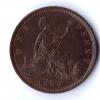
Hmm, I am assuming that the surface is good, and it hasn't been cleaned, difficult to tell in the photos which are a bit contrasted out , if I was selling I would say VF, if buying GF. There is minimal wear to the shield, some to robes and features of Britannia, some light wear to Victoria's wreath, hair and bodice; perhaps VF in the hand? Jerry -
Assistance sought identify 1860 penny
jelida replied to hazelman's topic in British Coin Related Discussions & Enquiries
Just checked, yes, its BP1860E, which equates to F6. -
Assistance sought identify 1860 penny
jelida replied to hazelman's topic in British Coin Related Discussions & Enquiries
Looks like Freeman 6 to me, Obverse 1 and reverse B. I don't have Gouby to hand, but the eyeline is vertical and the rim is narrow so its not one of the 'pattern' obverses; the reverse has 3 incuse lines delineating the design on the shield. This is the most frequently seen 1860 beaded. Decent example of an attractive coin. Jerry -
DNW Shilling Collection Just Sold
jelida replied to VickySilver's topic in British Coin Related Discussions & Enquiries
Shame, they look lovely in the catalogue. I would make DNW aware of your thoughts, looking to the future. Hopefully they will tone with time. A mate of mine always has a tray of silver basking on his window-sill, reckons it takes a few months depending on weather. Jerry -
1860 beaded border penny
jelida replied to hazelman's topic in British Coin Related Discussions & Enquiries
Excellent! Every collection should have one. Or two. Or three. Jerry -
Looks like a nice coin to me, but a halfgroat rather than a groat, and I think it might be mm bell with the two dots (behind the bust, signifying value) overstruck on two I's, which makes it a rare variety. However I am not a hammie expert, so do get another opinion! good luck, Jerry
-
No, I don't have an F41, but I had so many gaps to fill at the LCA that I aimed for other things. I perhaps underestimated the rarity in anything over fine, but I have not been back into pennies for long enough to really get an idea of what's likely to appear on the market over a reasonable time-scale. I don't think prices are really necessary, any interested party can usually research these on line, and they are so volatile for these great rarities that they are little more than a talking point. Leave it to Spink to be the guide for sellers of these rarities (most of those prices would be thought under-estimates by you or I ). Jerry
-
Interesting metal detecting finds
jelida replied to George111's topic in Nothing whatsoever to do with coins area!
Yes, nice find, havn't had one of these for years. -
Yes, very helpful, Richard, I trust it will continue to expand as your time allows. Jerry
-
Broadside for me too, last night, but from a hand-pump in the Open Hearth. Nectar. Jerry
-
And another, thanks Pete. Jerry
-
Yes, I examined the coin and decided not to bid unless very cheap. Not a disasterous coin, but I would always have wanted to improve on it. Multiple tiny pockmarks, as if it had had sand trodden into it. A little corrosion on the reverse too. Jerry
-
So they certainly have to be a perfect fit. I do want a circular capsule, to fit in my coin trays . I think I need a comment from Rob if possible, his appear spot-on. Has anybody tried the American Air-tite brand? They seem well liked on the net. You can also get circular inserts that prevent movement. Son is off to the USA with work shortly, could bring some back. Jerry
-
How do members rate the various brands of coin capsule available? I have decided to store my better pennies in capsules in the trays of my coin cabinets. I have a couple of capsules that conform to the general Lighthouse brand formula, but they feel rather cheap and a couple have slight crazing of the edges. I have one that came with a penny from Rob that is much nicer, and fits a penny perfectly (no rattling) , rounded edges, flat sides, internal dia 31mm appx, external 36mm appx. Does any-one know what make that would be? I would need up to a couple of hundred, but would be happy to order from overseas if necessary. Do members have any issues with coin capsules? Jerry
-
My local pub gave me one last night, they watch out for me, they had their first two this week. Jerry
-
It would take me a week-end too, getting all those out of their slabs........? Not much from LCA there? Jerry
-
Yes, £460 plus juice, £538.20 total. I bought that too. Jerry
-
I had a great day, got the N over N sideways, lcw under foot, nice 4F, E over P and lots of lesser coins, and paid over the odds for the books but I wanted the Jerrams volumes. Also bought the 1879 with the 'shuttle' above the lighthouse . Great to meet Richard, pretty in pink, sad not to see Pete but Semra said he had not turned up. Nice lunch in Spoonies between the penny sections. And hot chocolate in Starbucks on the way home. Perfect day. Jerry
-
http://www.ebay.co.uk/itm/6-Silver-Hand-Hammered-Coins-And-1-Copper-Coin-/252310205812?hash=item3abedc3574:g:2iEAAOSwoudW2ygj Surprise, surprise, another Pontefract beseiged! Nice of him to weigh all the silver together, and the jetton on its own. Looking at his feedback, he sold another Pontefract in a job lot last year. Somebody will waste money on it. Jerry
-
I'll be there, will wear a brown sweatshirt with Landrover on the front, if you see me say hello! Jerry
-
EU referendum - in or out?
jelida replied to 1949threepence's topic in Nothing whatsoever to do with coins area!
Out. Trade without barriers is the only real EU positive, and it will be in both parties interest to negotiate some sort of reciprocal arrangement eventually, as with selective work/travel/habitation agreements. Cost, overregulation, immigration, loss of autonomy and influence as a nation, political and legal imposition we can do without. There will of course be winners and losers, but that's what democracy is all about, and I won't loose sleep if the eventual decision goes against my view, though I would then like to see the nation and politicians pull together and kick the issue into touch for a generation . Jerry -
I'll be there, but again funds dependent on LCA... Jerry
-
Interesting metal detecting finds
jelida replied to George111's topic in Nothing whatsoever to do with coins area!
Nice to see with the retaining wires and leather. Sometimes leather and even cloth survives when intimate with copper alloy, protected from bacterial or fungal action by the leaching copper salts, I have several mediaeval examples. Jerry -
Sadly probably true. ? Jerry