terrysoldpennies
-
Posts
832 -
Joined
-
Last visited
-
Days Won
59
Content Type
Profiles
Forums
Events
Downloads
Store
Gallery
Articles
Everything posted by terrysoldpennies
-
 My best three finds over the past few months. The 1937 is amazing I feel its FDC, and thanks to a tip off from Pete

-
Paddys right Zoo. yours is an Reverse H
-
This is the wave type
-
Penny Acquisition of the week
terrysoldpennies replied to Paulus's topic in British Coin Related Discussions & Enquiries
I'm inclined to agree with Ian that its ghosting from a die clash with the toothed edge on the reverse die, as the shape of the marks don't look to be formed from the letters in LC WYON , and anyway LC WYON would have to be present on the reverse die to be transferred over onto the obverse die. So F16 for me -
Penny Acquisition of the week
terrysoldpennies replied to Paulus's topic in British Coin Related Discussions & Enquiries
It also looks from your picture to have a narrower rim than the normal Rev. 4 . Its an interesting one , ether of your possible explanations could be true Richard. -
Its a real Chinese penny
-
More Pennies
terrysoldpennies replied to Prax's topic in British Coin Related Discussions & Enquiries
I can say its a definite Obverse 7 as its the older portrait of Victoria and the gap between Victorias head and the out edge of the coin is large, on the 6 its quite close -
More Pennies
terrysoldpennies replied to Prax's topic in British Coin Related Discussions & Enquiries
Hi Pete, the Ja often has a slightly rotated N in ONE as this example also has, so as the coin is both worn and damaged, and I couldn't be sure, I said it looks like a Ja, ????? -
More Pennies
terrysoldpennies replied to Prax's topic in British Coin Related Discussions & Enquiries
It looks like a Gouby K+Ja a Variety of the Freeman 7+h -
When you consider it , its surprising that a 180 degree inversion on the N hasn't happened more often, as it could so easily be overlooked
-
Cameo or not ? Be wary !
terrysoldpennies replied to secret santa's topic in British Coin Related Discussions & Enquiries
This is how the Americans grade them.
-
1908 Penny (take 2)
terrysoldpennies replied to Unwilling Numismatist's topic in British Coin Related Discussions & Enquiries
Ian , its a Halfpenny Obverse shown with a Reverse d From a 1908 penny. The obverse has a 157 Teeth -
1908 Penny (take 2)
terrysoldpennies replied to Unwilling Numismatist's topic in British Coin Related Discussions & Enquiries
It looks like a 1+d , can it be, or is it a case of the wrong obverse picture placed with the reverse. Tony Clayton stated that one example has been found. Did you buy it Ian ???? -
More Pennies
terrysoldpennies replied to Prax's topic in British Coin Related Discussions & Enquiries
No rob its caused by Coastal Erosion. common problem with metal detector finds -
More Pennies
terrysoldpennies replied to Prax's topic in British Coin Related Discussions & Enquiries
No this is half the missing coin type. -
OOps that's my bugger up. anyway we collect the refined Milled, not that primitive Hammered stuff.
-
That's with unworn coins, I have a couple that are worn, and its very obvious as the ear is totally untouched with the rest of the head badly worn.
-
Yes your right Pete, but the same principal applies , It seems unlikely that a test die would be given a broken tooth for recognition, as at around this time increasing or decreasing the number of teeth was used, as with the 1908 164a and the 1911 hollow neck .
-
Bearing in mind that what we refer to as a broken tooth, is the result of a partial blockage of one of the tiny indentations around the edge of the die that form the teeth. its not unlikely that the hole started to block during 1915 then gradually built up, but during this period a small piece of the blockage may have broken away again, only to them build up again giving the variation in the size of the tooth, this may explain the out of sequence 1915 coin of Zoos
-
My 1915

-
Last week I picked up a decent 1915 Recessed ear penny [ show on the next post] . That got me thinking about the life of this die, from its start to its destruction, and so I hunted around and managed to find an 1916 example with a die crack running right across the coin from the A in GRA to the D in DEF on the other side of the coin. The crack is so bad that it must have meant the end of the die, and the production of this type. Pic. On the left starting at the top is an early 1915 strike without the crack , but note the tooth in question seems smaller than the others ?. Next down is also a 1915 and appears to have a small curved bite out of the bottom of the tooth . Third down is a 1916, it has now developed, and a large section is missing from the tooth. Finally the bottom insert also 1916 shows the final extent of the tooth loss, as this is the example with the die crack, also shown in full on the right side.

-
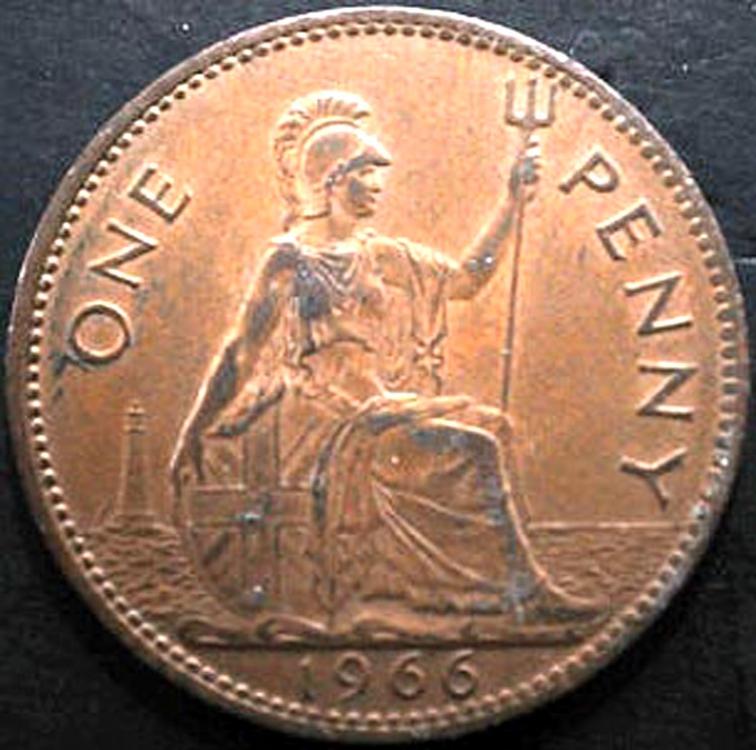
Its nearly as rare as the 1967 penny